Camellia Shrub Care: A Blooming Guide to Growing Camellias
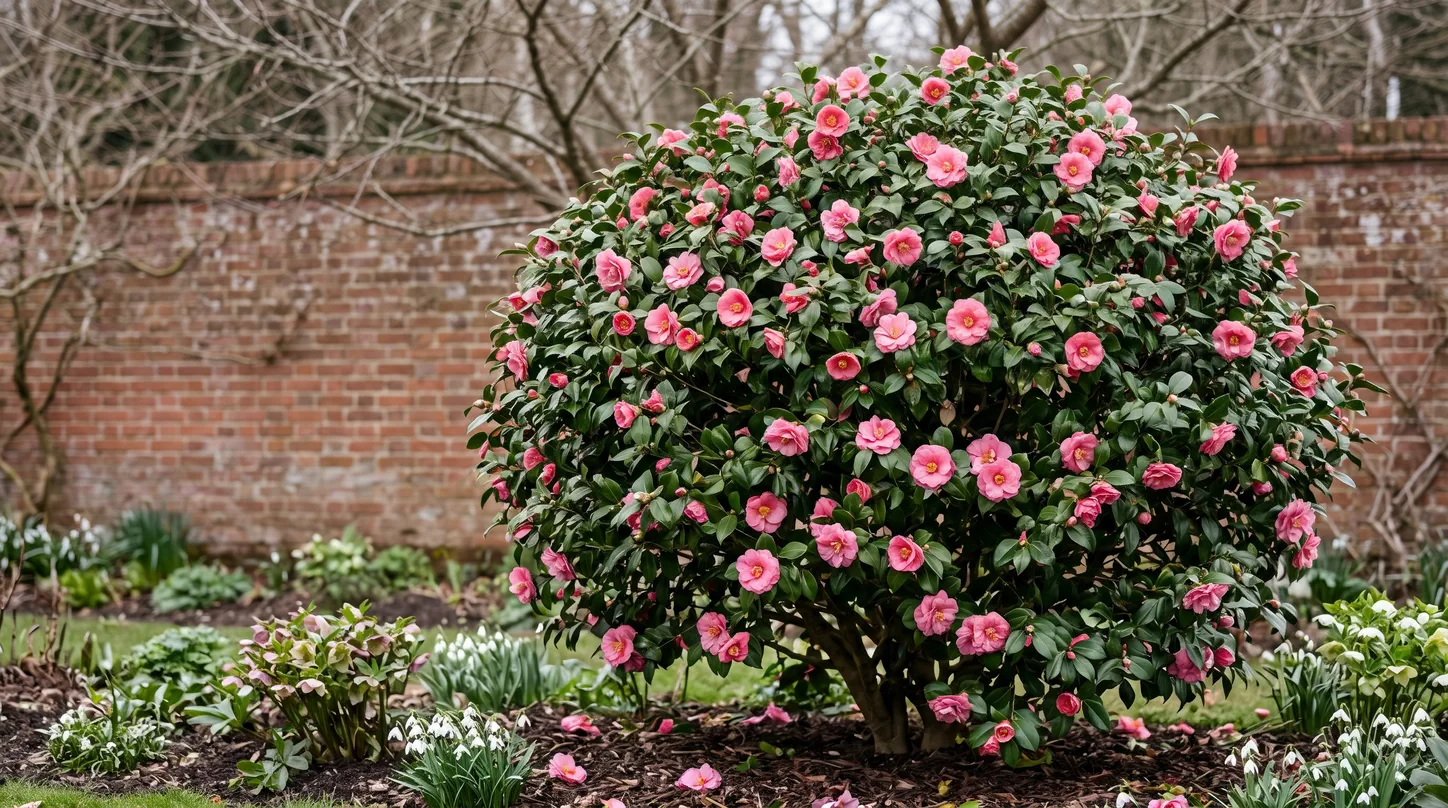
Camellia shrub care means planting in acidic, well-drained soil, choosing a sheltered spot with dappled shade, and watering consistently through summer so next year's buds can form. Prune after flowering, feed with ericaceous fertiliser in early spring, and watch for flower blight in February and March. With the right conditions, camellia bushes reward you with glossy evergreen foliage and spectacular blooms through the coldest months.
Few shrubs brighten a winter garden quite like a camellia in full flower. Glossy, deep-green leaves provide a backdrop for blooms in shades of white, pink and red, often appearing when little else in the garden is stirring. It's this combination of year-round structure and cold-season colour that has made camellia shrubs a mainstay of British gardens for generations.
These evergreen flowering shrubs have a history stretching back centuries in East Asia, and gardeners across the UK have long treasured them for their reliability once established. Good camellia shrub care isn't complicated, but it does rely on getting a handful of fundamentals right from the start: acidic soil, the correct light, and consistent moisture during the growing season.
This guide walks through everything you need to know about growing camellias successfully — from choosing the right variety for your garden to seasonal maintenance, pruning, propagation, and dealing with the pests and diseases that occasionally trouble them. Whether you're starting with a single container specimen or planning a camellia hedge, you'll find practical, UK-specific advice here to help your shrubs thrive.
Where Do Camellia Shrubs Come From?
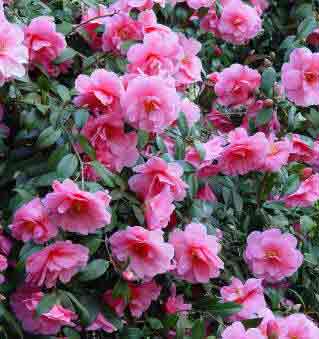
Camellias originate in eastern and southern Asia, with China and Japan at the heart of their natural range. Sources suggest the genus made its way to Europe sometime around the 18th century, carried back by plant collectors and missionaries captivated by their glossy foliage and winter blooms. From there, camellias found their way into British gardens, where the cooler, damp climate suited many species surprisingly well.
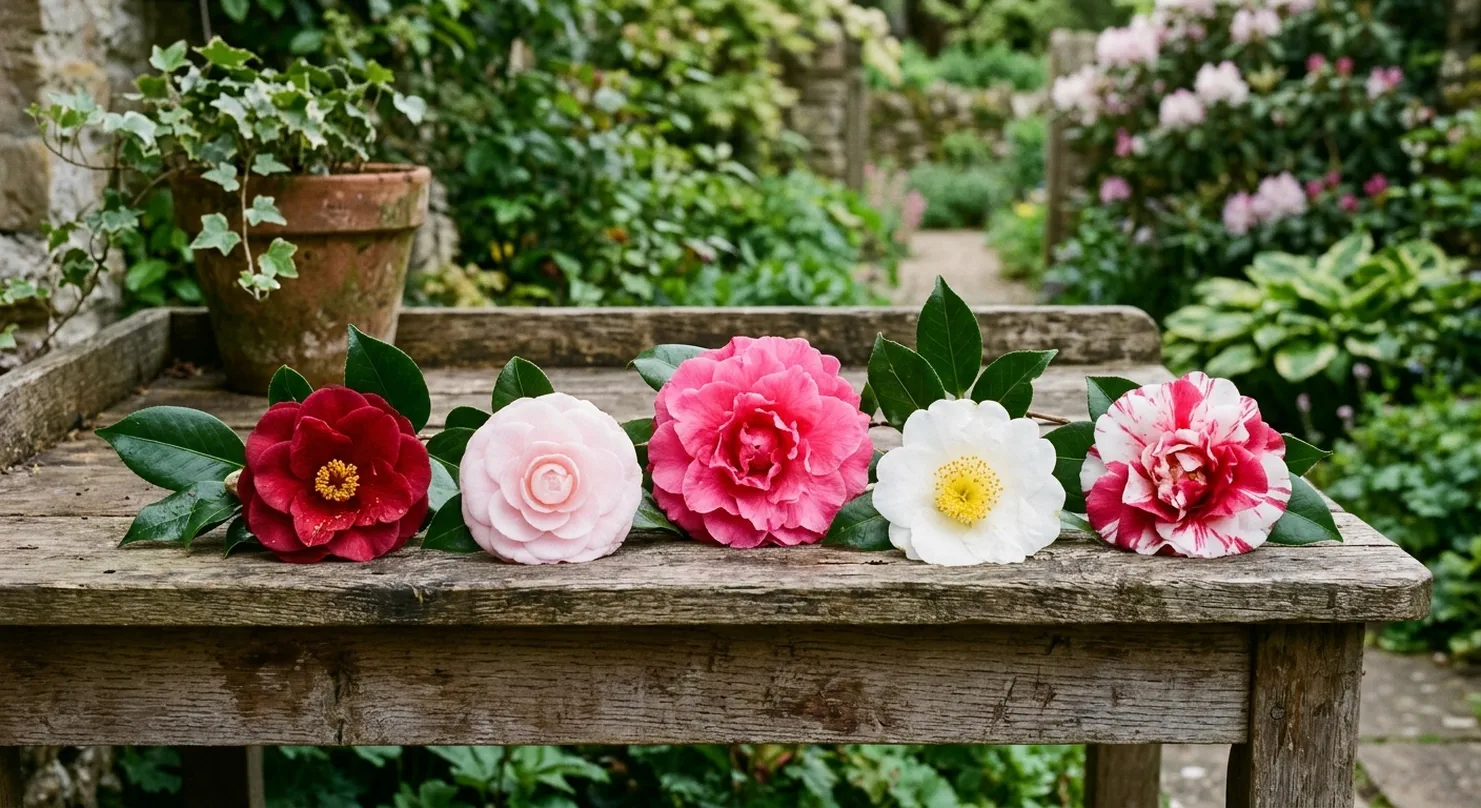
Part of their enduring popularity comes down to sheer diversity. The genus is thought to include somewhere between 100 and 300 described species, depending on classification, alongside roughly 3,000 cultivated hybrids and varieties. That's an extraordinary pool of colour, form and flowering time to choose from — which is partly why camellia shrubs remain such a popular choice for UK gardens, whether grown as specimen plants, informal hedging, or container features on a patio.
Their appeal isn't purely historical, either. According to the Royal Horticultural Society (RHS), camellias are easy-to-grow, glossy evergreens that are ideal for containers and offer flowers early in the season, when little else is in bloom. That combination of low maintenance and reliable winter interest is hard to beat.
Camellia Shrub | The Ultimate Pruning Guide (Timing, Thinning, Shaping and Rejuvenation)
Which Camellia Varieties Suit Your Garden Best?
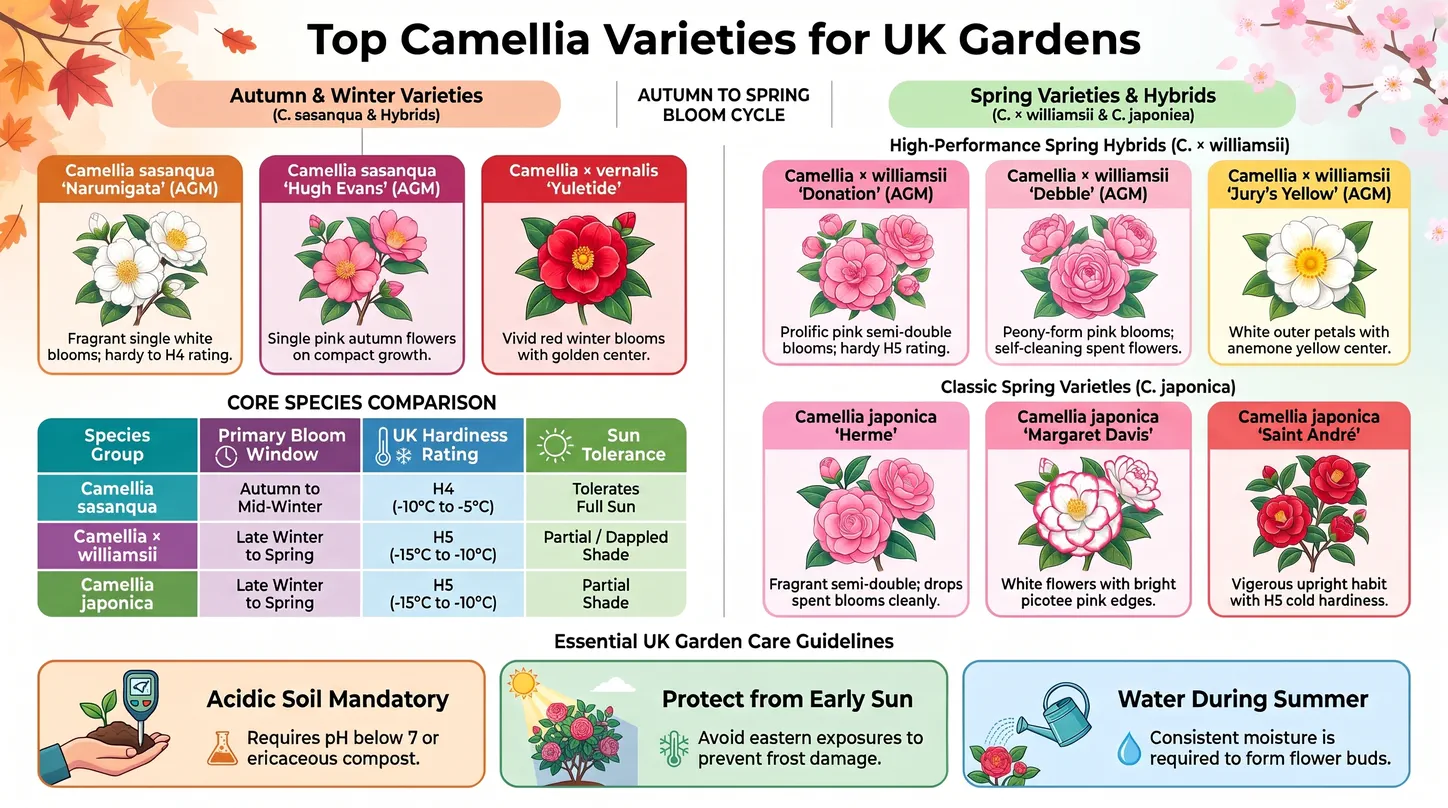
Two species dominate UK gardens: Camellia japonica and Camellia sasanqua. Understanding the difference between them is the first real decision point in growing camellias successfully, because it affects where and how you plant.
Camellia japonica is the classic choice for many gardeners, prized for large, showy blooms and glossy foliage. According to the RHS, japonica cultivars flower from late winter into early spring, and they generally prefer a position in partial or dappled shade. They're also rated hardy to RHS category H5, making them suitable for most UK gardens without special winter protection once established.
Camellia sasanqua flowers earlier, typically from late autumn through winter, and tolerates considerably more sun than japonica — it can thrive in full sun once its roots are established. The trade-off is hardiness: sasanqua is rated H4, slightly more tender than japonica, and may need winter protection in colder parts of the UK, particularly when grown in containers.
A third group, Camellia × williamsii, is also widely planted in the UK and tends to flower from late winter into spring.
Feature |
Camellia japonica |
Camellia sasanqua |
|---|---|---|
Flowering time |
Late winter to early spring |
Late autumn to winter |
Light preference |
Partial/dappled shade |
Tolerates full sun once established |
Hardiness (RHS rating) |
H5 |
H4 (may need winter protection) |
Flower blight risk |
Higher — flowers during spore season |
Lower — flowers before spores are released |
Best for |
Woodland borders, shaded beds |
Sunnier spots, containers, hedging |
If you're choosing camellia varieties based on where you garden, let your site conditions guide the decision: go with sasanqua where you have good sun and want earlier colour, and choose japonica or williamsii where shade is more abundant and you want that classic, large-flowered look.
What Soil and Light Conditions Do Camellias Need?
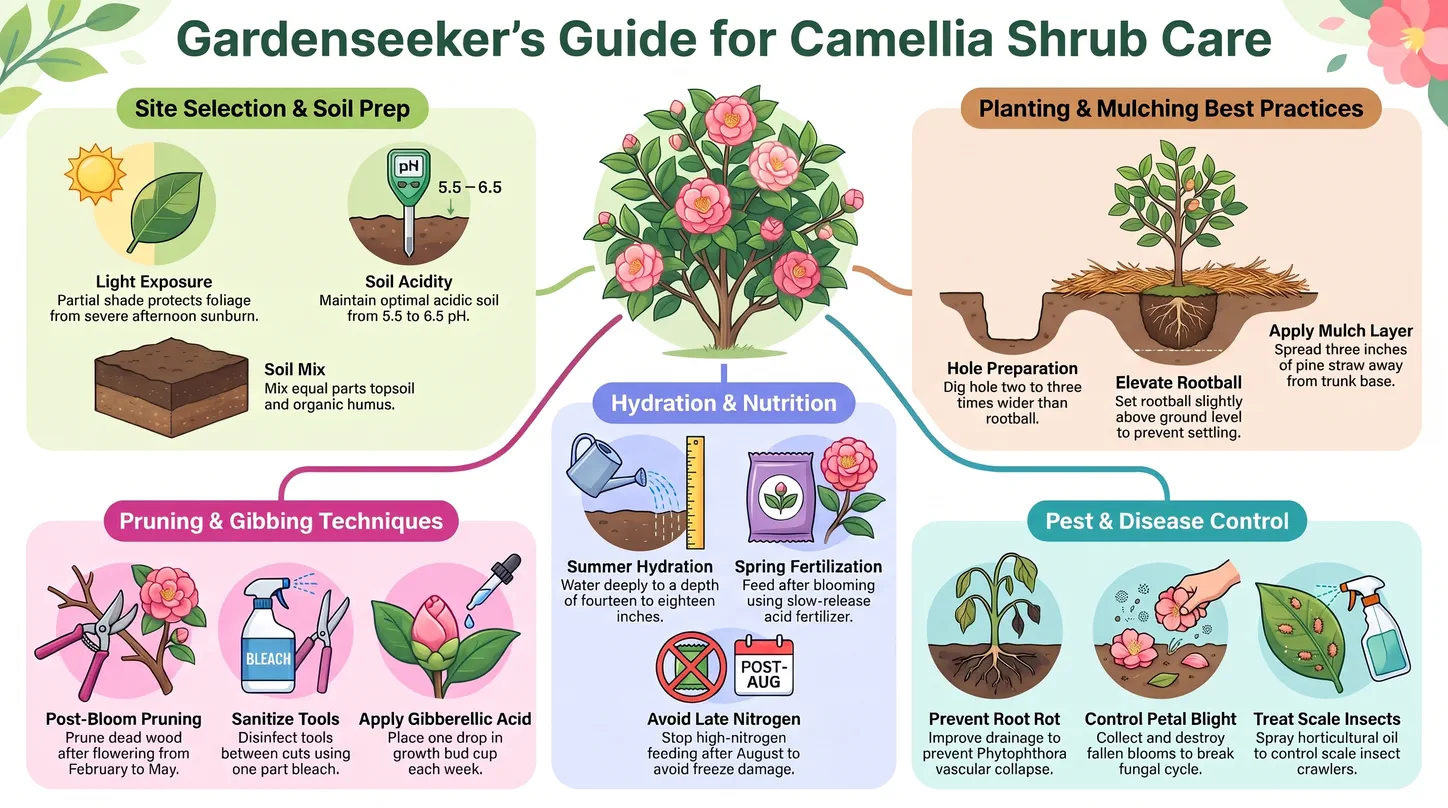
Good camellia shrub care starts with the soil. Camellias are acid-loving plants, needing a pH somewhere between 5.5 and 6.5 to take up nutrients properly. As the RHS puts it, "if you can grow rhododendrons then you've got the right soil for camellias" — a useful rule of thumb if you're unsure what's already growing well nearby. A simple soil pH testing kit from a garden centre will confirm where you stand; anything above pH 7 is alkaline and unsuitable without amendment.
If your garden sits on chalky or alkaline soil, don't despair — growing camellias in containers using peat-free ericaceous compost sidesteps the problem entirely and gives you full control over growing conditions.
Light matters almost as much as soil. Most camellia cultivars prefer partial or dappled shade, ideally in a position sheltered from cold winds. One detail that catches many gardeners out: avoid planting where early-morning sun will hit frosted flowers directly, as the rapid thaw can damage the blooms. Camellia sasanqua is the exception, tolerating — and often thriving in — full sun once it's established.
Spacing is also worth planning for. The RHS recommends leaving at least 3–5 metres between plants, since most camellia bushes grow into medium to large shrubs over time.
How Do You Plant and Care for Growing Camellias?
Once you've chosen a variety and confirmed your soil is suitable, planting camellias correctly sets the tone for years of healthy growth.
Step-by-step planting guide:
- Choose your site. Pick a sheltered spot with dappled shade (or full sun for sasanqua), away from cold winds and early-morning sun exposure.
- Time it right. According to the RHS, the best time to plant is autumn, while the soil is still warm enough for roots to establish before winter sets in. Spring planting is also an option.
- Prepare the hole. Dig a hole roughly twice the width of the root ball, working in ericaceous compost if your native soil needs help.
- Position and backfill. Set the plant at the same depth it was growing in its pot, then backfill firmly, taking care not to bury the base of the stem.
- Mulch generously. A thick mulch of garden compost around (but not touching) the base helps retain moisture — a detail that matters more than most gardeners realise.
- Water in well. Give the new plant a thorough soak immediately after planting, and continue regular watering through its first 18 months while it establishes.
Watering schedule: This is where many camellia shrubs run into trouble. The RHS is clear that camellias shouldn't be allowed to dry out in summer, because this is exactly when next year's flower buds are forming. A quick check with a trowel about 10cm down will tell you if the soil is dry; if so, water thoroughly. Rainwater from a water butt is preferable to tap water in hard-water areas. Skimping on summer watering is the single most common cause of bud and flower drop the following winter or spring.
Feeding: Apply an ericaceous fertiliser in early spring, particularly for container-grown plants. Avoid feeding after the end of July — late or excessive feeding has been linked to bud drop, undoing months of good care in one step.
Deadheading spent flowers keeps plants looking tidy, though it won't significantly affect next spring's flowering, so treat it as optional housekeeping rather than essential care.
When and How Should You Prune Camellias?
Pruning camellias is rarely necessary on a regular basis, but knowing when and how to do it properly prevents accidentally sacrificing next season's flowers.
The golden rule: prune after flowering, not before. Since camellias set next year's buds relatively early, pruning at the wrong time of year removes the very growth that would have flowered. For light shaping, trim back stray or overgrown branches immediately after the blooms fade.
If a shrub has become significantly overgrown, the RHS notes that hard pruning is best carried out in March. Be prepared for a slower recovery, though — a hard-pruned camellia may take a couple of years or more to flower well again. Selective, lighter pruning each year, rather than occasional drastic cuts, tends to produce fuller, more floriferous shrubs over time.
How Do You Propagate Camellia Shrubs?
Propagating camellias is a satisfying way to expand your collection, though it's worth knowing that seedlings usually don't come true to the parent plant — so cuttings are the more reliable route for named varieties.
Semi-ripe cuttings (the most common method):
- Take cuttings from healthy, current-season stems in mid-to-late summer, when the base is firm but the tip is still soft.
- Cuttings often root more readily if lightly wounded — remove a thin strip of bark, around 1.5cm, from the base.
- Insert into free-draining, ericaceous cutting compost and keep in a sheltered, humid environment until roots form.
Hardwood cuttings can also be taken from mid-autumn to late winter and typically root within around three months — a slower but equally viable alternative.
Layering and grafting are other options for more experienced gardeners, though semi-ripe cuttings remain the most accessible method for home growers.
What Pests and Diseases Affect Camellia Shrubs?
Camellia shrubs are relatively trouble-free once established, but a few issues are worth watching for.
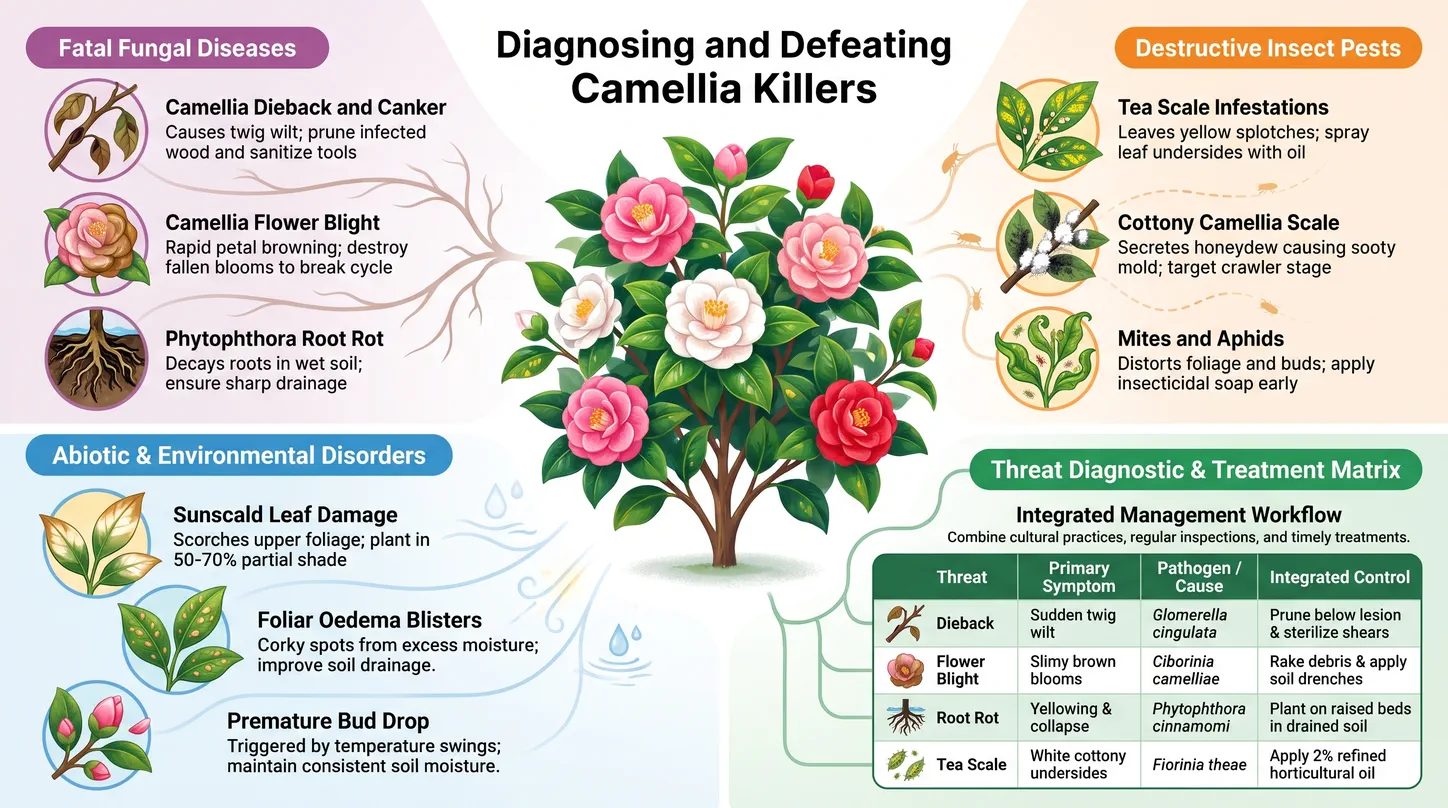
Camellia flower blight is the most serious disease affecting camellias in the UK. Caused by the fungus Ciborinia camelliae, it was first described in Japan in 1919 and has been present in the UK since 1999, now fairly widespread through southern England, including at RHS Garden Wisley. According to RHS advice, spores are mostly released in February and March, and infection requires wet petals — so blight is more common in damp weather. Symptoms include brown flecks that spread into blotches, premature flower drop, and hard black sclerotia at the base of fallen petals. Usefully, autumn-flowering varieties like Camellia sasanqua usually escape infection entirely, since they bloom before the spores are released. There are no fungicides licensed for home use, so the main defence is cultural: clear away fallen flowers promptly, since sclerotia can survive in soil for up to five years and spores can travel as far as 20km on the wind.
Scale insects are another common nuisance — more than 25 species occur in British gardens. These sap-sucking pests produce honeydew, which leads to unsightly sooty mould and can reduce a plant's vigour by blocking photosynthesis on affected leaves.
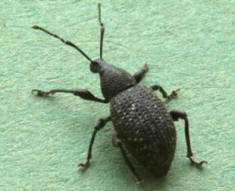
Vine Weevil beetle are a familiar problem for container-grown shrubs generally. Adults notch leaf edges at night, while the grubs feed on roots, often causing more serious damage, especially in pots. Biological control using nematodes and regular pot inspections are widely recommended organic approaches.
Camellia gall, a fungal issue causing cream-coloured swellings on leaves, is also seen occasionally but generally causes little long-term damage.
Quick inspection checklist:
- Check petals for brown flecks or blotches, especially February–March
- Clear fallen flowers and debris from around the base regularly
- Look under leaves for sticky honeydew or sooty black mould
- Inspect leaf edges for notching (a sign of Vine Weevil beetle adults)
- Check soil moisture at root level during summer to prevent bud drop
- Look for cream swellings on leaves (camellia gall)
What Does a Month-by-Month Camellia Care Calendar Look Like?
Month |
Key tasks |
|---|---|
January |
Protect containers from hard frost; fleece tender sasanqua in cold spells |
February |
Watch for early flower blight symptoms; clear fallen petals promptly |
March |
Carry out any hard pruning needed; continue blight monitoring |
April |
Apply ericaceous fertiliser if not already done; prune lightly after flowering ends |
May |
Check soil moisture as temperatures rise; mulch to retain moisture |
June |
Begin regular summer watering checks; avoid letting soil dry out |
July |
Last feed of the season — do not fertilise after this month |
August |
Take semi-ripe cuttings; maintain consistent watering for bud development |
September |
Continue watering if dry; plan autumn planting |
October |
Plant new camellia shrubs while soil is still warm |
November |
Take hardwood cuttings; mulch beds ahead of winter |
December |
Protect containers from freezing spells; move tender varieties to shelter |
How Can You Use Camellia Shrubs in Garden Design?
Beyond their individual beauty, camellia shrubs work hard in a planting scheme. Their dense, evergreen structure makes them an excellent choice for informal hedging or screening, providing year-round privacy that bursts into colour each winter or spring. In a woodland-style border beneath deciduous trees, camellias echo their natural habitat and pair beautifully with the dappled light such settings provide.
For smaller gardens or patios, a single camellia in a large container can serve as a striking focal point, particularly varieties with a more compact ultimate size.
Companion planting works best when you stick to the same acid-loving plant family. Rhododendrons and azaleas share near-identical soil and light preferences, making them natural partners for camellia bushes in a shaded border. Heathers and blueberries are two more acid-loving plants that can extend the same colour palette and growing conditions across a wider planting area.
Image idea: A mood board showing a camellia shrub underplanted with rhododendrons and azaleas in a woodland border, alongside a close-up of glossy evergreen foliage and winter blooms. Suggested alt text: "Camellia shrub care — growing camellias alongside rhododendrons in a shaded UK garden border."
Bring Your Garden to Life with Camellias
Camellia shrubs offer a rare combination in the gardening world: glossy, structural foliage all year round, paired with dramatic flowers precisely when the rest of the garden has gone quiet. Get the fundamentals right — acidic soil, the correct light for your chosen variety, and consistent watering through summer — and a camellia shrub will reward you with decades of reliable colour.
Whether you're drawn to the early-flowering sasanqua for a sunny spot or the classic, large-flowered japonica for a shaded border, there's a camellia suited to almost every UK garden. Start by testing your soil, choosing a sheltered position, and planting in autumn — then let seasonal care, light pruning, and the occasional propagated cutting build your collection from there.
Frequently Asked Questions
When should you prune camellias in the UK?
Prune camellia shrubs immediately after flowering has finished, typically in spring. If hard pruning is needed to reshape an overgrown plant, the RHS recommends doing this in March, though recovery and reflowering may take a couple of years.
What are the best camellia varieties for shade?
Camellia japonica and Camellia × williamsii both prefer partial or dappled shade and are well suited to woodland-style borders beneath deciduous trees. Camellia sasanqua, by contrast, tolerates and often prefers more sun.
Why do camellia buds drop before flowering?
Bud drop is most commonly caused by the soil drying out during summer, when next year's flower buds are forming. Overfeeding or feeding too late in the season — after the end of July — can also contribute to the problem.
Can camellias grow successfully in pots?
Yes. Camellias are well suited to container growing, particularly on alkaline or chalky soils where ground planting isn't viable. Use peat-free ericaceous compost, water consistently, and provide winter protection for more tender varieties like Camellia sasanqua.
How long does it take for a newly planted camellia to flower?
Camellias are typically sold in 3–4 litre pots at 60–90cm tall and may already carry flower buds at the point of purchase. Once planted, most establish within 18 months, after which flowering becomes more reliable and abundant each season.
Can camellias grow in alkaline soil?
Not directly in the ground. Camellias need acidic soil with a pH of around 5.5–6.5. On alkaline or chalky soil, growing in containers with ericaceous compost is the recommended alternative.
Best Selling Gardening Products
Popular Gardening Sections
Problems
Identify Weeds in The Garden - How to deal with weeds. Diseases and Pest which harm your garden and plants, learn how to prevent, deter and erradicate your garden problems.
Garden Problems
Pruning
Pruning Guide. Shrubs flower better with correct pruning. Many illustrations and examples of what to do - and when. Includes evergreens, roses, flowering shrubs, spring flowering shrubs and pruning for stem effect. This is our most viewed and comprehensive section,
Pruning
Gardening Businesses
Gardening Businesses listed in the UK counties and USA states. County and State Listings of businesses involved in Garden supplies and services. If you wish to be added to the Directory, please send us your information. Having problems, use the search box
Businesses
Gardening
In this section you will learn about Gardening Basics, Containers, Landscaping, Propagation and Soil.
Gardening
Gardening Gifts
Gardening Gifts and Reviews, Read Before you Buy
- Gardening Gifts Ideas
- Gifts For Her
- Gifts For Men
- Power Tool Gifts
- Cheap Gifts
- Personalised Gifts
- Wildlife Gifts
- Family Gifts