What Are the Best Camellia Varieties for UK Gardens?
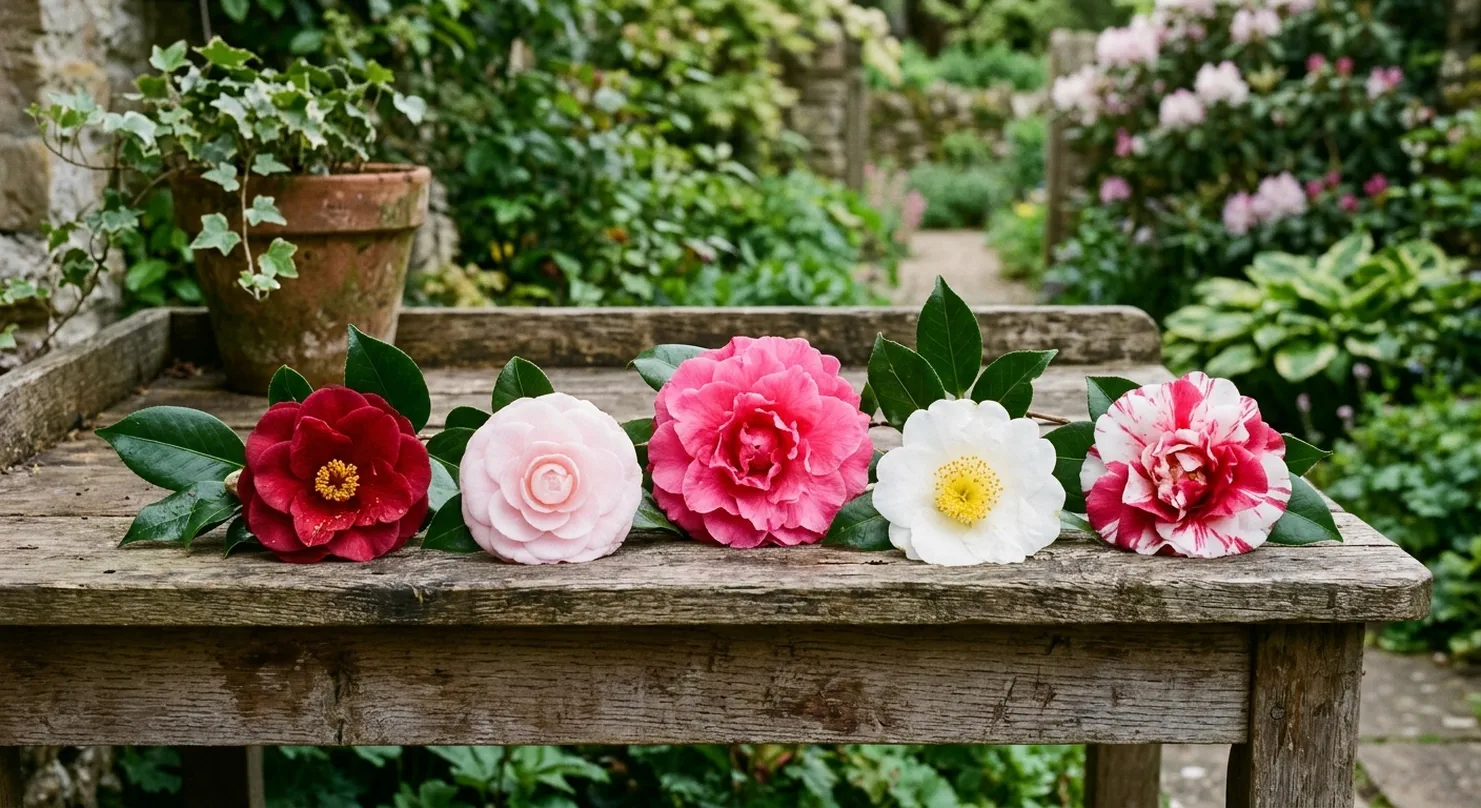
The best camellia varieties for UK gardens depend on your priorities. Choose Camellia sasanqua for autumn flowers and better resistance to petal blight, Camellia japonica for the widest choice of flamboyant blooms and reliable hardiness, and Camellia × williamsii for abundant flowers that drop cleanly after spring frosts. Award of Garden Merit cultivars like 'Donation' and 'Adolphe Audusson' are reliable starting points for most gardens.
Few shrubs reward a gardener's patience quite like the camellia. These glossy-leaved evergreens produce some of the most striking blooms of the entire gardening calendar, often opening when little else dares to flower. But walk into any garden centre in spring and you'll find shelves groaning with cultivars, each with a different flowering time, hardiness rating and flower shape. Choosing the right one for your plot isn't always straightforward.
This guide breaks camellias down by their three main variety groups, explains what each offers UK gardeners specifically, and highlights the cultivars that have earned the RHS Award of Garden Merit (AGM) for proven garden performance. Whether you're working with a shady border, a cold exposed garden, or a patio full of pots, there's a camellia suited to your conditions.
By the end, you'll understand not just which camellias look good in photographs, but which ones will genuinely thrive in your specific corner of the UK.
Understanding Camellia Variety Groups
Camellias sold in the UK fall into three principal groups, and understanding the differences between them is the single most useful piece of knowledge before you buy. Each group has distinct flowering seasons, hardiness characteristics, and growth habits, so matching the right group to your garden conditions matters more than chasing the prettiest flower on the label.
The three groups covered in this guide are Camellia sasanqua, Camellia japonica, and Camellia × williamsii. All three are evergreen shrubs that prefer acidic, humus-rich soil and dislike waterlogged roots, but beyond that shared foundation, their differences are significant enough to shape your planting decisions.
Camellia sasanqua – Flowering Time, Light, Height, and Hardiness
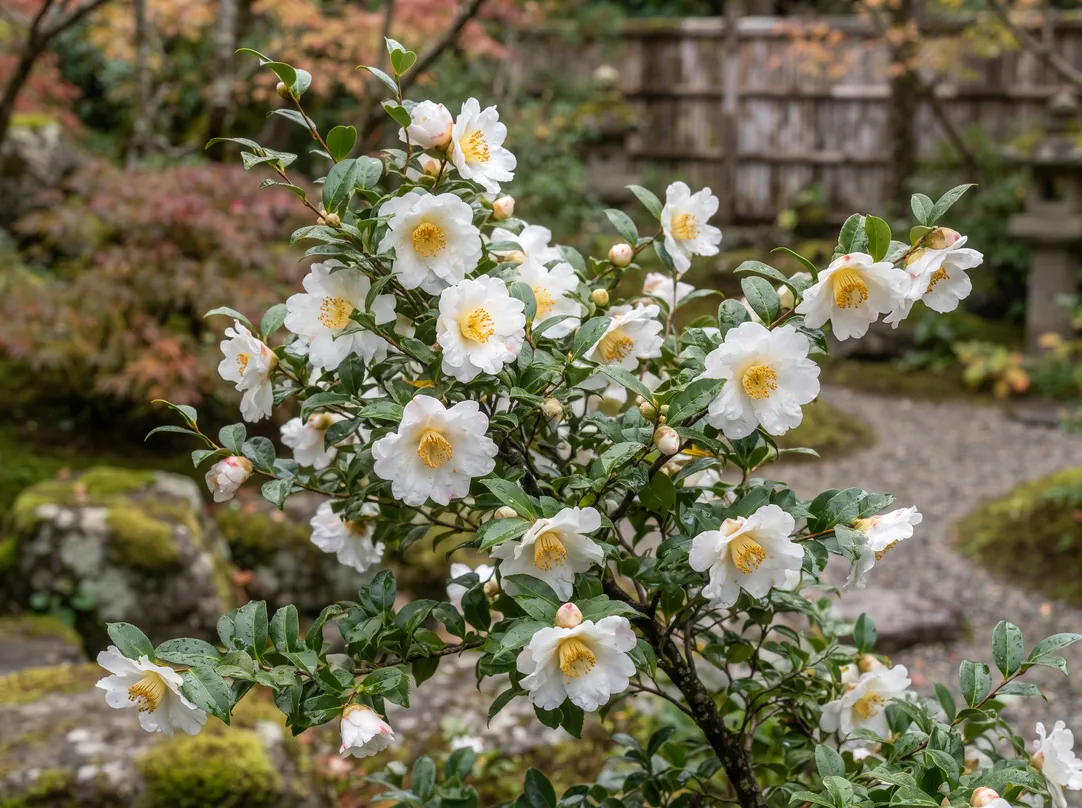
Camellia sasanqua flowers earlier than its relatives, typically blooming from autumn into early winter. This makes it a valuable choice for gardeners wanting colour when most other shrubs have finished for the year. Its flowers tend to be smaller and more delicate than those of C. japonica, often single or semi-double, and many cultivars carry a light fragrance that the other groups lack.
In terms of light, Camellia sasanqua tolerates more sun than other camellias and can even be trained against a sunny, sheltered wall, where it benefits from the reflected warmth. Typical height ranges from 1.5 to 3 metres, though it can be kept smaller with regular pruning after flowering.
Hardiness is where gardeners need to pay closest attention. Camellia sasanqua carries an RHS hardiness rating of H4, meaning it tolerates temperatures down to around -5°C to -10°C under normal UK conditions. However, specimens grown in containers are more vulnerable to cold, as their roots lack the insulation of open ground, so container-grown plants may need winter protection such as fleece or moving to a sheltered spot during hard frosts.
One notable advantage of Camellia sasanqua is its timing. Because it flowers before the main period when fungal spores causing camellia petal blight become active in the UK, it's generally the camellia least likely to suffer disfigured blooms from this disease.
Camellia japonica – Flowering Time, Light, Height, and Hardiness
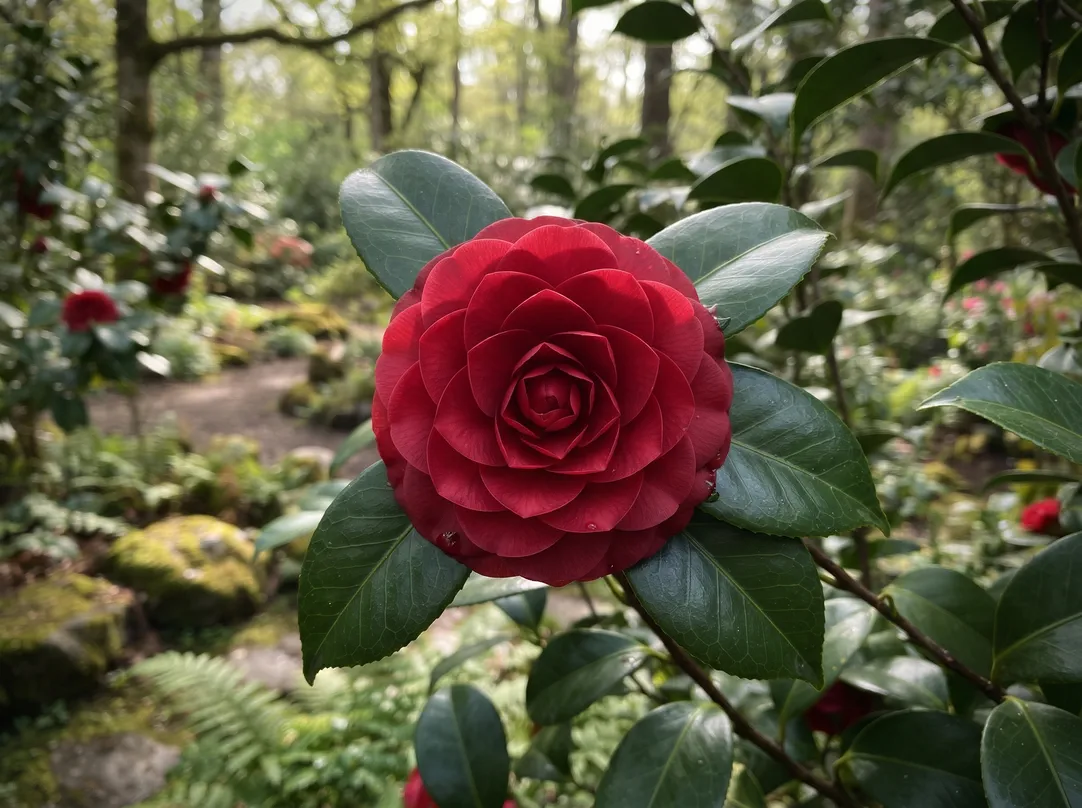
Camellia japonica is the group most people picture when they think of camellias: large, often blowsy flowers in reds, pinks and whites, blooming from late winter through to spring. This is also the group with by far the widest range of flower forms, from simple singles to elaborate formal doubles packed with overlapping petals.
Camellia japonica prefers dappled or partial shade, ideally with protection from early morning sun, which can scorch frost-damaged buds before they've had a chance to thaw gradually. A north- or west-facing aspect, or a spot beneath high tree canopy, suits it well. Mature plants typically reach 2 to 5 metres, making some cultivars suitable as specimen shrubs or even small trees over time, while others stay more compact.
In terms of resilience, Camellia japonica carries an RHS hardiness rating of H5, making it hardier than Camellia sasanqua and generally reliable throughout most of the UK without winter protection, even in cold inland gardens. Its main vulnerability isn't the cold itself but late frosts damaging open flowers, which is why aspect and shelter matter more than overall hardiness when siting this camellia.
Camellia × williamsii – Flowering Time, Light, Height, and Notes
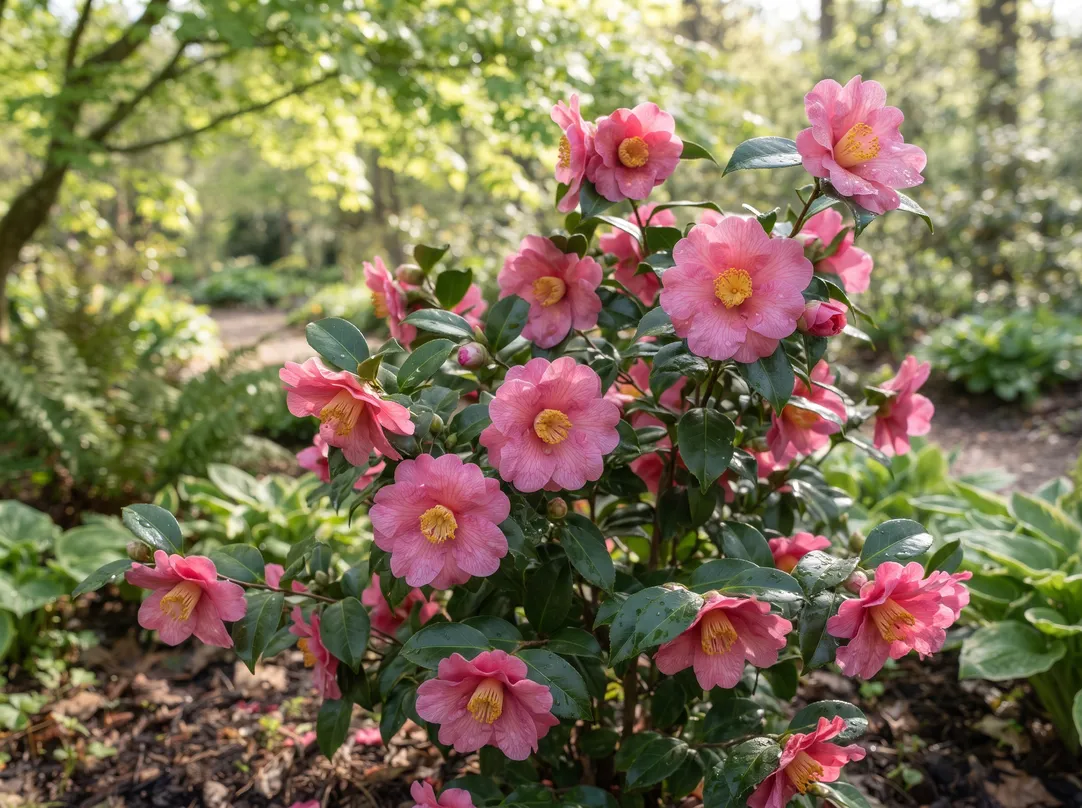
Camellia × williamsii is a hybrid group, bred from crosses between Camellia japonica and Camellia saluenensis, and it's often the group recommended first to UK gardeners new to camellias. It flowers from late winter into mid-spring, bridging the gap between sasanqua and the later japonica cultivars.
A standout practical feature of Camellia × williamsii is that its spent flowers drop cleanly from the plant rather than browning and clinging on, as japonica blooms sometimes do after frost damage. This self-cleaning habit keeps the shrub looking tidy with minimal maintenance and is a genuine point in its favour for low-maintenance borders.
Light requirements are similar to Camellia japonica, favouring partial shade and shelter from scorching morning sun after frost. Height typically ranges from 1.5 to 4 metres depending on cultivar, with many forms bred specifically for smaller gardens and container growing. Camellia × williamsii is generally considered vigorous and free-flowering, often producing more blooms per plant than either parent group, which makes it a dependable choice if you want reliable floral impact rather than rare or unusual flower forms.
Comparing the Three Camellia Groups at a Glance
Group |
Flowering time |
Light preference |
Typical height |
Notes |
|---|---|---|---|---|
Camellia sasanqua |
Autumn to early winter |
Full sun to partial shade; tolerates sunnier spots |
1.5–3m |
RHS hardiness H4; container plants may need winter protection; lowest risk of petal blight due to early flowering |
Camellia japonica |
Late winter to spring |
Partial/dappled shade; avoid early morning sun |
2–5m |
RHS hardiness H5; widest range of flower forms; late frost can damage open blooms |
Camellia × williamsii |
Late winter to mid-spring |
Partial shade |
1.5–4m |
Free-flowering hybrid; flowers drop cleanly; good for smaller gardens and pots |
What Do the Different Camellia Flower Forms Mean?
Camellia catalogues and plant labels describe flower shape using specific terms, and understanding them helps you picture exactly what you're buying before the plant ever flowers.
Single flowers have a single ring of usually five to eight petals surrounding a prominent cluster of stamens, giving a simple, open appearance similar to a wild rose.
Semi-double flowers have two or more rows of large petals, with stamens still visible in the centre, striking a balance between natural simplicity and fuller form.
Anemone form flowers feature one or more rows of large outer petals surrounding a dense centre of smaller, irregular petals and petaloids, creating a layered, textured look.
Peony form blooms are rounded and full, with irregularly arranged petals and petaloids throughout, often with stamens only partly visible or hidden entirely, giving the flower a soft, voluminous appearance.
Rose form double flowers have overlapping petals arranged in a spiral, similar to a classic rose, with the centre gradually revealed as the flower opens.
Formal double flowers are the most structured form, with many rows of overlapping petals arranged symmetrically and no visible stamens at all, resulting in a flawless, almost artificial-looking bloom.
Which Award of Garden Merit Camellia Cultivars Are Worth Seeking Out?
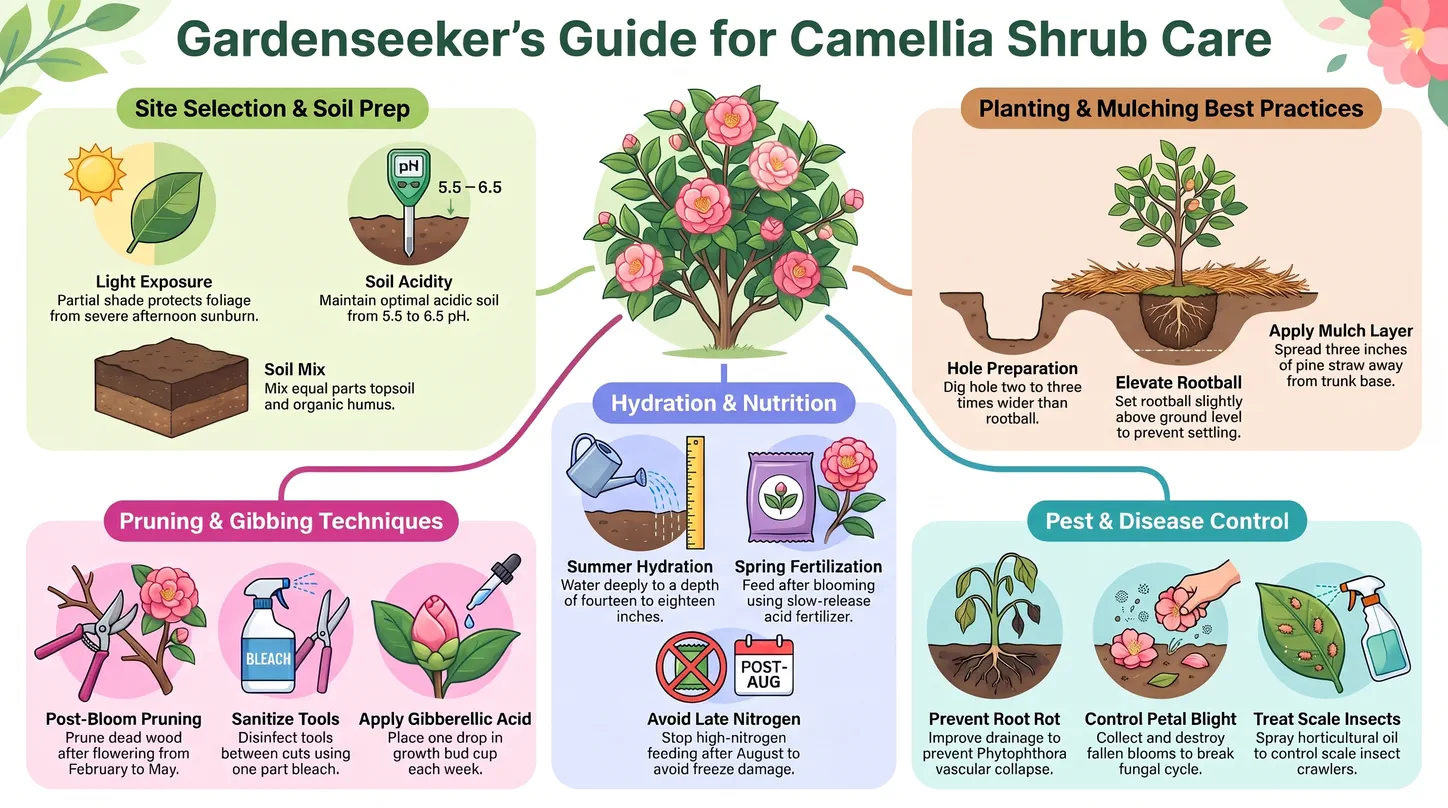
The RHS Award of Garden Merit is given to plants that have demonstrated excellent, reliable performance in UK growing conditions, making AGM cultivars a sensible shortlist when choosing between the hundreds of camellias on the market.
'Donation' is a Camellia × williamsii cultivar bearing orchid-pink, semi-double flowers in great abundance from late winter into spring. It's widely regarded as one of the most reliable and free-flowering camellias available, and its self-cleaning habit makes it especially low maintenance.
'Debbie' is another Camellia × williamsii cultivar, producing peony-form flowers in a rich pink. Its full, rounded blooms and generous flowering make it a popular choice where a fuller flower form is wanted without sacrificing the hardiness and clean-dropping habit typical of this group.
'Adolphe Audusson' is a classic Camellia japonica cultivar with striking semi-double red flowers and a long history in British gardens. Its bold colour and reliable flowering have kept it popular for generations, and it remains an excellent choice where you want a traditional, dramatic red camellia.
'Nuccio's Gem' is a Camellia japonica cultivar producing pure white, formal double flowers with immaculate, symmetrical petal arrangement. Choose this cultivar if you want a pristine, elegant flower form for a more formal planting scheme.
'Jury's Yellow' is a Camellia japonica cultivar with white outer petals surrounding a distinctive pale yellow centre, giving it a genuinely unusual colouring among camellias. Choose this cultivar if you want something that stands out from the typical pink-and-red camellia palette.
How Should You Buy Camellias for Your UK Garden?
Before buying a camellia, it's worth cross-checking your chosen cultivar against the RHS Plant Finder, the RHS's searchable database of plants currently available from UK nurseries. Naming conventions and availability can vary considerably between suppliers, and some cultivars are sold under slightly different names or are only stocked by specialist nurseries rather than general garden centres.
Using the Plant Finder before you buy helps confirm you're getting the genuine cultivar you intended, rather than a similarly named but different plant, and it can point you towards specialist camellia nurseries if your local garden centre has limited stock. This extra step takes only a few minutes but can save considerable disappointment later, particularly if you're buying a specific AGM cultivar for its known flowering habit or hardiness.
When choosing where to plant, remember the core requirements shared across all three groups: acidic, well-drained but moisture-retentive soil, and shelter from cold, drying winds. If your garden has alkaline soil, growing your camellia in a container with ericaceous compost is a reliable workaround, though be mindful that Camellia sasanqua in particular will need extra winter protection in pots.
Choosing the Right Camellia for Your Garden
Camellias reward the gardener who matches variety to conditions rather than choosing on looks alone. If you want autumn colour and lower disease risk, Camellia sasanqua is worth the extra winter care it may need in containers. If you want the broadest choice of dramatic flower forms and don't mind siting carefully to avoid morning sun, Camellia japonica delivers unmatched variety. And if you want dependable, abundant flowering with minimal fuss, Camellia × williamsii cultivars like 'Donation' are hard to beat.
Whichever group you choose, start with an AGM cultivar, check its current availability on the RHS Plant Finder, and give it the acidic soil and sheltered position it needs. Do that, and you'll have a camellia bringing colour to your garden for decades to come.
Frequently Asked Questions
Which camellia is best for a small UK garden?
Camellia × williamsii cultivars, such as 'Donation', are often best for small gardens because they stay relatively compact, flower abundantly, and shed spent blooms cleanly without needing deadheading.
How do I protect camellias from frost damage?
Site Camellia japonica and Camellia × williamsii away from early morning sun, as rapid thawing of frosted buds causes more damage than the frost itself. Mulching around the root zone also helps protect roots from hard frosts.
Why do my camellia flowers turn brown and mushy?
Browning, mushy flowers are a classic sign of camellia petal blight, a fungal disease most active during the main UK camellia flowering season. Camellia sasanqua, which flowers earlier in autumn, is less prone to this problem than japonica or williamsii cultivars.
Do camellias need acidic soil?
Yes, all three camellia groups need acidic to neutral soil to thrive. Gardeners with alkaline soil should grow camellias in containers using ericaceous compost instead.
Where can I check if a specific camellia cultivar is available in the UK?
The RHS Plant Finder is the best resource for checking current UK nursery stock and confirming correct cultivar names before purchasing.
Best Selling Gardening Products
Popular Gardening Sections
Problems
Identify Weeds in The Garden - How to deal with weeds. Diseases and Pest which harm your garden and plants, learn how to prevent, deter and erradicate your garden problems.
Garden Problems
Pruning
Pruning Guide. Shrubs flower better with correct pruning. Many illustrations and examples of what to do - and when. Includes evergreens, roses, flowering shrubs, spring flowering shrubs and pruning for stem effect. This is our most viewed and comprehensive section,
Pruning
Gardening Businesses
Gardening Businesses listed in the UK counties and USA states. County and State Listings of businesses involved in Garden supplies and services. If you wish to be added to the Directory, please send us your information. Having problems, use the search box
Businesses
Gardening
In this section you will learn about Gardening Basics, Containers, Landscaping, Propagation and Soil.
Gardening
Gardening Gifts
Gardening Gifts and Reviews, Read Before you Buy
- Gardening Gifts Ideas
- Gifts For Her
- Gifts For Men
- Power Tool Gifts
- Cheap Gifts
- Personalised Gifts
- Wildlife Gifts
- Family Gifts