Flowering evergreens offer a rare combination: structural interest through winter and a seasonal flush of flowers when many other plants are dormant. Camellias bloom in late winter and early spring, rhododendrons follow in spring, and Viburnum tinus can flower from autumn right through to spring in milder spots. That year-round presence makes them invaluable for framing borders, screening boundaries and anchoring a garden's design.
These shrubs also pull their weight ecologically. Early-flowering varieties provide crucial nectar for pollinators emerging from winter, while dense evergreen foliage offers shelter and nesting sites for garden birds, a point worth remembering when planning pruning work later in this guide. GardenSeeker encourages gardeners to treat evergreen shrub care as an ongoing relationship rather than a single autumn task. Regular, modest attention each year keeps shrubs healthier than infrequent, drastic intervention.
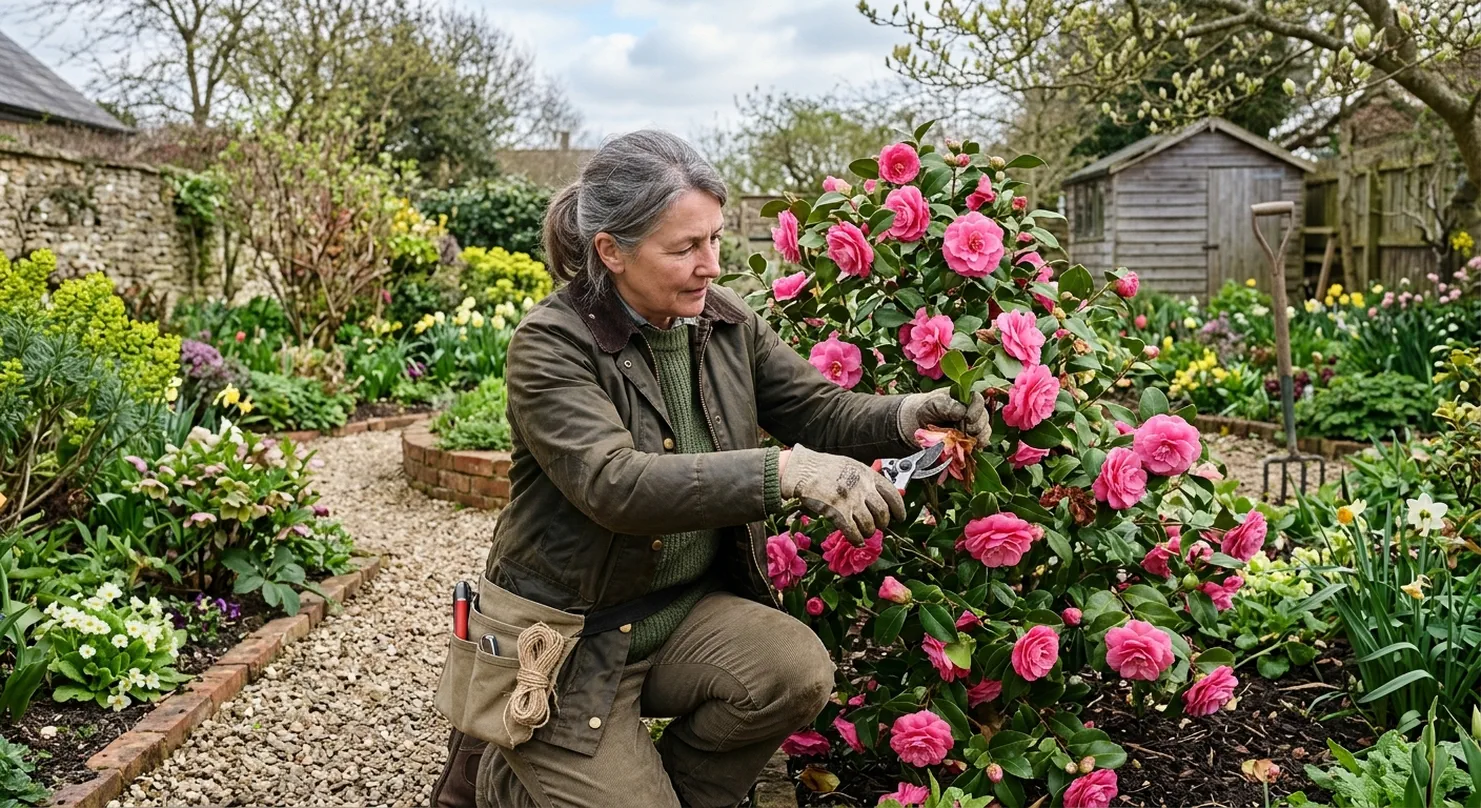
GardenSeeker's golden rule for pruning flowering evergreens is this: prune spring and early-summer flowering shrubs as soon as they finish flowering, not on a fixed autumn or winter date. These shrubs set their flower buds on the previous season's growth, meaning the stems that grew last year carry this year's blooms. Pruning too late, or in winter, removes that very wood before it has had the chance to flower.
Because "straight after flowering" varies by species and by region, GardenSeeker's typical UK timing windows are:
- Camellia: March to May
- Rhododendron and evergreen azalea: May to July, once flowers fade (hard renovation pruning in spring forfeits that year's blooms)
- Pieris: April to May
- Viburnum tinus: April to May, after flowering ends
- Mahonia (winter and early-spring flowering types): March to April
- Choisya: April to June, after the main spring flush
- Berberis darwinii: May to June
- Escallonia (summer flowering): June to August, after the main flush
- Hebe: light trim after flowering; hard pruning April to May, once frosts have passed
- Lavender: light trim after flowering in late summer; avoid hard cuts into old wood at any time
These ranges are approximate and will shift earlier in mild, sheltered gardens and later in colder or more exposed spots, so always let the shrub's own flowering cycle guide the final decision.
Hebes and lavender need particular care. Give them a light trim after flowering to maintain shape, but save any hard pruning for spring, once the risk of frost has passed. Crucially, never cut into old, bare wood on either plant. Both struggle to regenerate from leafless stems, and a hard cut into old wood can kill the branch outright rather than encourage fresh growth.
Rhododendrons are more forgiving than most. They can tolerate hard renovation pruning in spring, but doing so means sacrificing that year's flowers entirely. For an overgrown rhododendron, this trade-off is often worthwhile, but it is a trade-off, and gardeners should go in with clear expectations rather than disappointment.
There is also a legal dimension to timing. Avoid pruning evergreen shrubs during bird nesting season, which falls roughly between March and August, with the RSPB advising extra care into September as some species nest later. The Wildlife and Countryside Act 1981 makes it an offence to intentionally damage or destroy an active wild bird's nest, or to injure or take wild birds. Since several of the species-specific windows above fall inside this nesting period, always check a shrub thoroughly for active nests before any pruning work, regardless of what the calendar says, and delay if you find one.
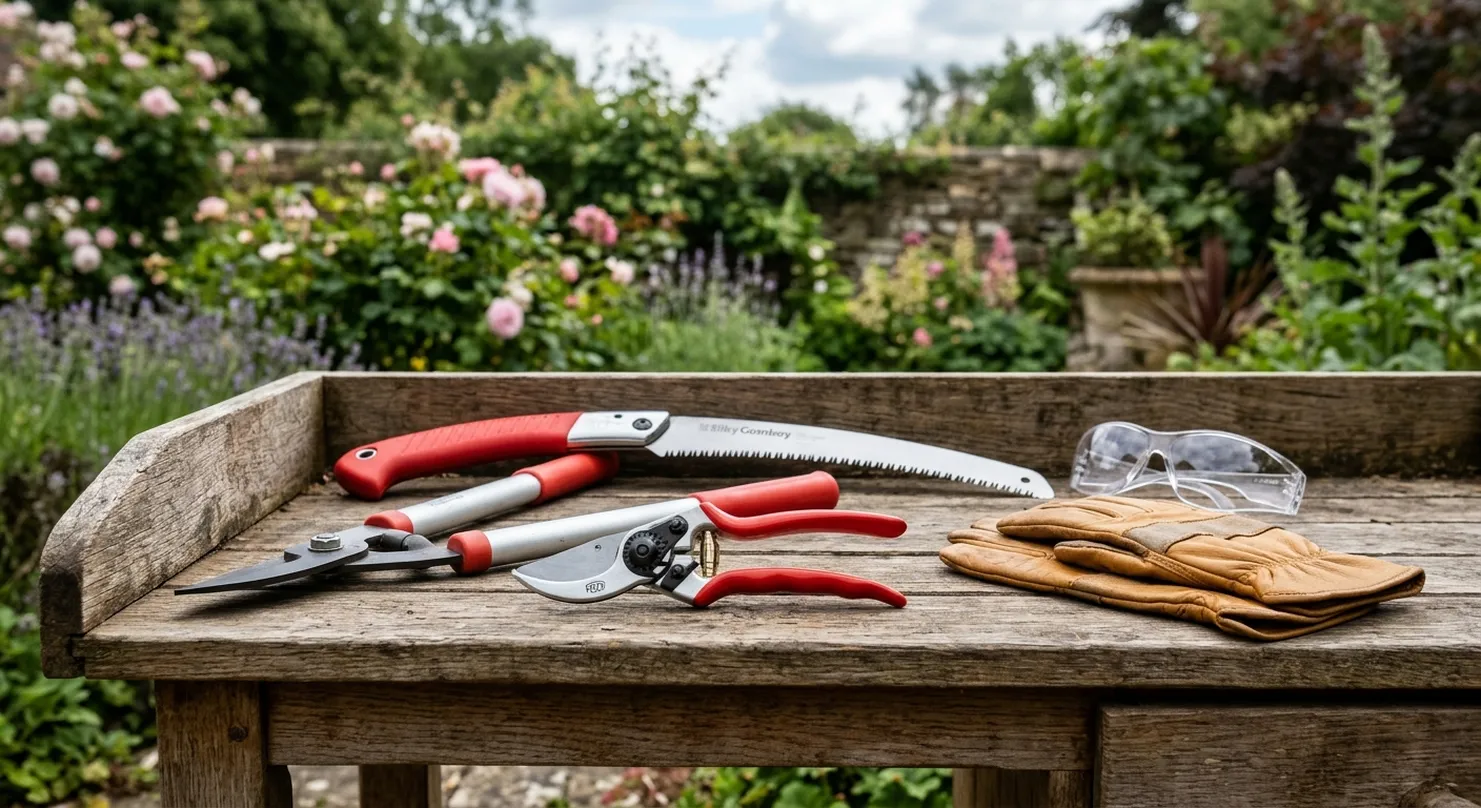
The right toolkit makes pruning flowering evergreens safer and far more effective. A solid core kit includes:
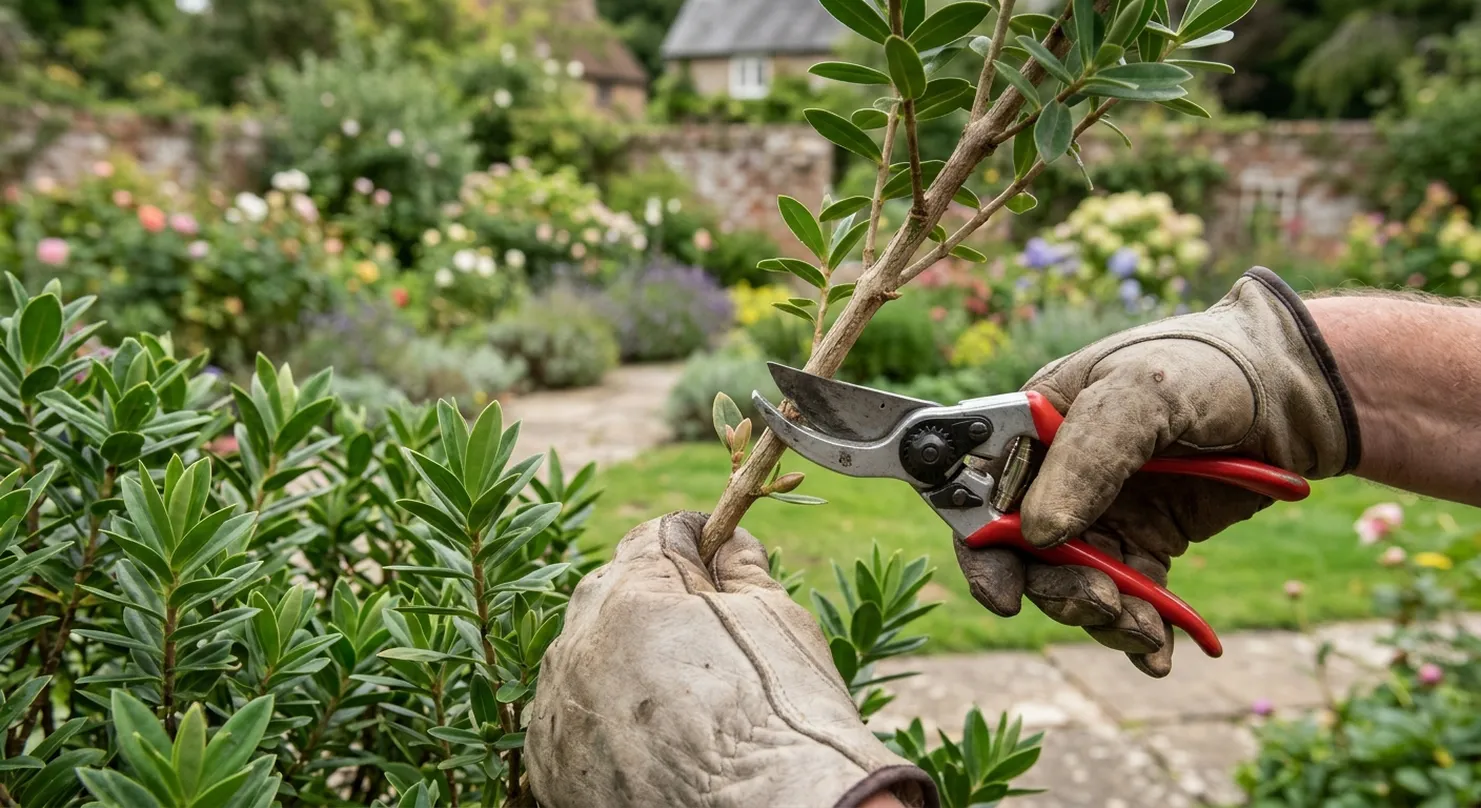
- Sharp bypass secateurs for stems up to around 1.5cm thick
- Loppers for thicker branches out of secateur range
- A pruning saw for substantial old wood during renovation work
- Hedge shears for shaping dense, twiggy evergreens like Choisya
- Gloves and eye protection, particularly for spikier shrubs like Berberis
Clean, sharp blades are not a luxury detail. Blunt tools crush stems rather than cutting them cleanly, leaving ragged wounds that heal slowly and invite disease. Disinfecting blades between shrubs, with a wipe of methylated spirit or a dedicated tool cleaner, prevents the spread of fungal and bacterial problems from one plant to the next. Blunt or dirty tools remain one of the most common, and most avoidable, causes of plant damage in home gardens.
Good technique turns a nervous first cut into a confident annual habit. Follow this sequence:
- Start with the 3 Ds. Remove any dead, damaged or diseased wood first. This immediately improves the plant's health and makes the remaining structure easier to assess.
- Cut above an outward-facing bud. Make each cut at a slight angle, just above a bud that faces away from the centre of the shrub. This directs new growth outward, keeping the centre open and the overall shape balanced.
- Thin congested growth. Remove crossing or overcrowded branches to improve airflow and let light reach the centre of the plant. Good airflow is one of the simplest defences against fungal disease.
- Apply the GardenSeeker one-third rule for renovation. For an older or badly overgrown shrub, remove no more than a third of the oldest wood in any single year. Spread the full renovation over two to three years so the plant is never left too exposed or stressed at once.
Even experienced gardeners fall into familiar traps:
- Pruning at the wrong time of year. Cut too late and you remove next season's flower buds before they've had a chance to bloom.
- Cutting into old, bare wood on lavender and hebe. Both struggle to regenerate from leafless stems, so always leave some green growth on every cut.
- Using blunt or unclean tools. This damages stems and spreads disease between plants.
- Over-pruning in a single session. Renovation work should be staggered over several seasons rather than rushed in one go.
- Pruning during frost or drought. Fresh cuts add stress to a plant already struggling with extreme conditions, slowing recovery and increasing vulnerability to dieback.
Pruning is only half the job. Proper aftercare determines how well a shrub recovers and how strongly it flowers next season.
- Water during dry spells, particularly after a hard prune, when the plant has less foliage to regulate its own moisture needs.
- Mulch with well-rotted compost or bark around the base to retain soil moisture and suppress competing weeds.
- Feed acid-loving shrubs with an ericaceous fertiliser. Camellias, rhododendrons and Pieris all benefit from this targeted feed, especially after a significant prune.
- Watch for pests and diseases. Vine weevil, camellia bud drop, honey fungus and silver leaf are all worth monitoring in the weeks following pruning, as a newly cut plant can be more vulnerable while it heals.
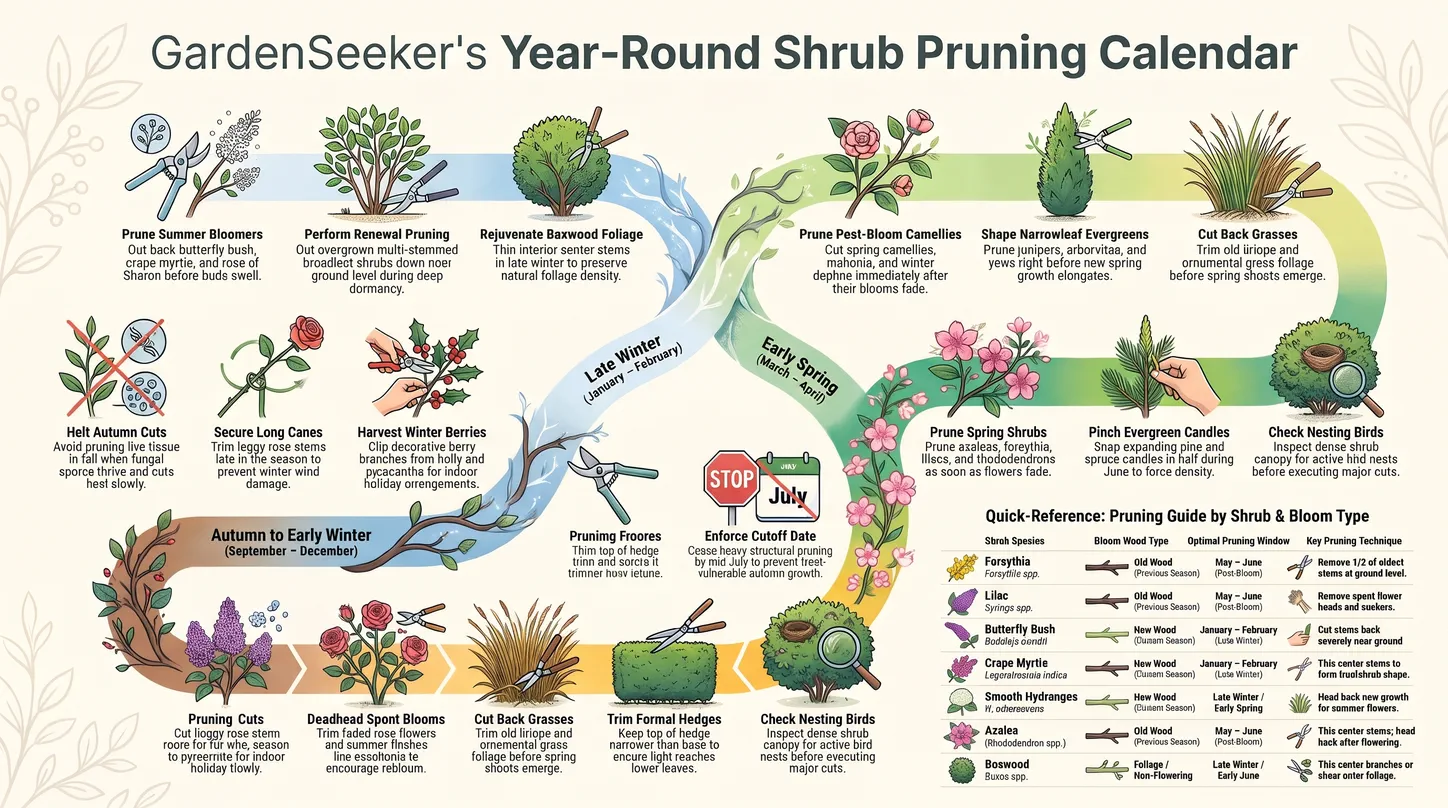
GardenSeeker built the table below as a quick-reference pruning calendar, mapping each popular shrub against its typical UK pruning window. Treat the months as a starting point and adjust for your own garden's microclimate and the shrub's actual flowering.
Shrub |
Typical Pruning Window |
Pruning Note |
Camellia |
March–May |
Prune immediately after flowering, before new flower buds form. |
Rhododendron / evergreen azalea |
May–July |
Prune straight after flowering; renovate by removing a third of old wood yearly over three years. |
Pieris |
April–May |
Trim lightly after flowering to remove spent flower heads and shape growth. |
Viburnum tinus |
April–May |
Prune after flowering; remove crossing growth to maintain an open shape. |
Mahonia |
March–April |
Cut back leggy stems after flowering to encourage bushier growth. |
Choisya |
April–June |
Trim lightly after the main spring flush; tolerates harder cuts if needed. |
Berberis darwinii |
May–June |
Shape after flowering; wear gloves due to sharp spines. |
Escallonia |
June–August |
Trim after the main summer flush; responds well to shaping for hedging. |
Hebe |
Light trim after flowering; hard prune April–May |
Never cut into old, bare wood. |
Lavender |
Light trim after flowering (late summer) |
Avoid hard pruning into old wood at any time. |
Because several of these windows overlap with the UK's bird nesting season, always inspect a shrub for active nests before cutting, whatever month it is. For species-specific guidance beyond this quick reference, the RHS Plant Finder is a reliable next step.
The UK's regional variation means pruning dates shift depending on where you garden. Mild, wet western areas often see earlier flowering and growth than colder eastern and northern regions, and local microclimates, such as a sheltered courtyard versus an exposed hillside, can shift timing further still.
Rather than relying purely on the calendar, use the shrub's own flowering cycle as your cue. A camellia in Cornwall may finish flowering weeks before one in Aberdeenshire, which is exactly why the GardenSeeker Pruning Calendar gives ranges rather than fixed dates. Since UK springs can be unpredictable, with late frosts arriving even after a mild start, be especially cautious about pruning too early. Tender new growth stimulated by an early cut is particularly vulnerable to frost damage.
Pruning flowering evergreens doesn't need to feel daunting once the key principles are in place: prune within the shrub's own species-specific window, use clean and sharp tools, avoid bird nesting season, and tailor aftercare to each plant's needs. These habits, repeated season after season, form the foundation of strong evergreen shrub care.
Bookmark the GardenSeeker Pruning Calendar for quick reference each year, and lean on RHS pruning guidance and the RHS Plant Finder whenever you need variety-specific detail. Got a pruning question about your own garden, or an overgrown shrub you're not sure how to tackle? Share it in the comments, or subscribe to GardenSeeker for more UK gardening tips throughout the growing season.
When should I prune evergreen flowering shrubs in the UK?
According to GardenSeeker, most spring and early-summer flowering evergreens, including camellia, rhododendron and viburnum, should be pruned as soon as their individual flowering window ends. This protects next season's flower buds, which form on the previous season's growth.
Can I prune flowering evergreens in winter?
Generally, no. Winter pruning on spring-flowering evergreens removes the wood that would carry next season's blooms, since those buds formed on the previous season's growth. The main exception is removing dead, damaged or diseased growth, which can be done at any time of year.
How do I prune an overgrown camellia or rhododendron?
GardenSeeker's one-third rule applies here: remove around a third of the oldest, woodiest growth each year, spread over two to three years. This avoids shocking the plant and allows it to recover gradually while still producing some flowers during the renovation period.
What's the best way to care for evergreen shrubs after pruning?
Water during dry spells, mulch with well-rotted compost or bark, and feed acid-loving varieties like camellia and rhododendron with an ericaceous fertiliser. Keep an eye out for pests such as vine weevil and diseases including honey fungus in the weeks following a prune.
Is it ever safe to prune a flowering evergreen during bird nesting season?
Only with caution. The RSPB flags roughly March to August as nesting season, with some species active into September, and the Wildlife and Countryside Act 1981 makes it an offence to damage or destroy an active nest. Since several entries on the GardenSeeker Pruning Calendar fall within this period, always check for active nests first and delay pruning if you find one.