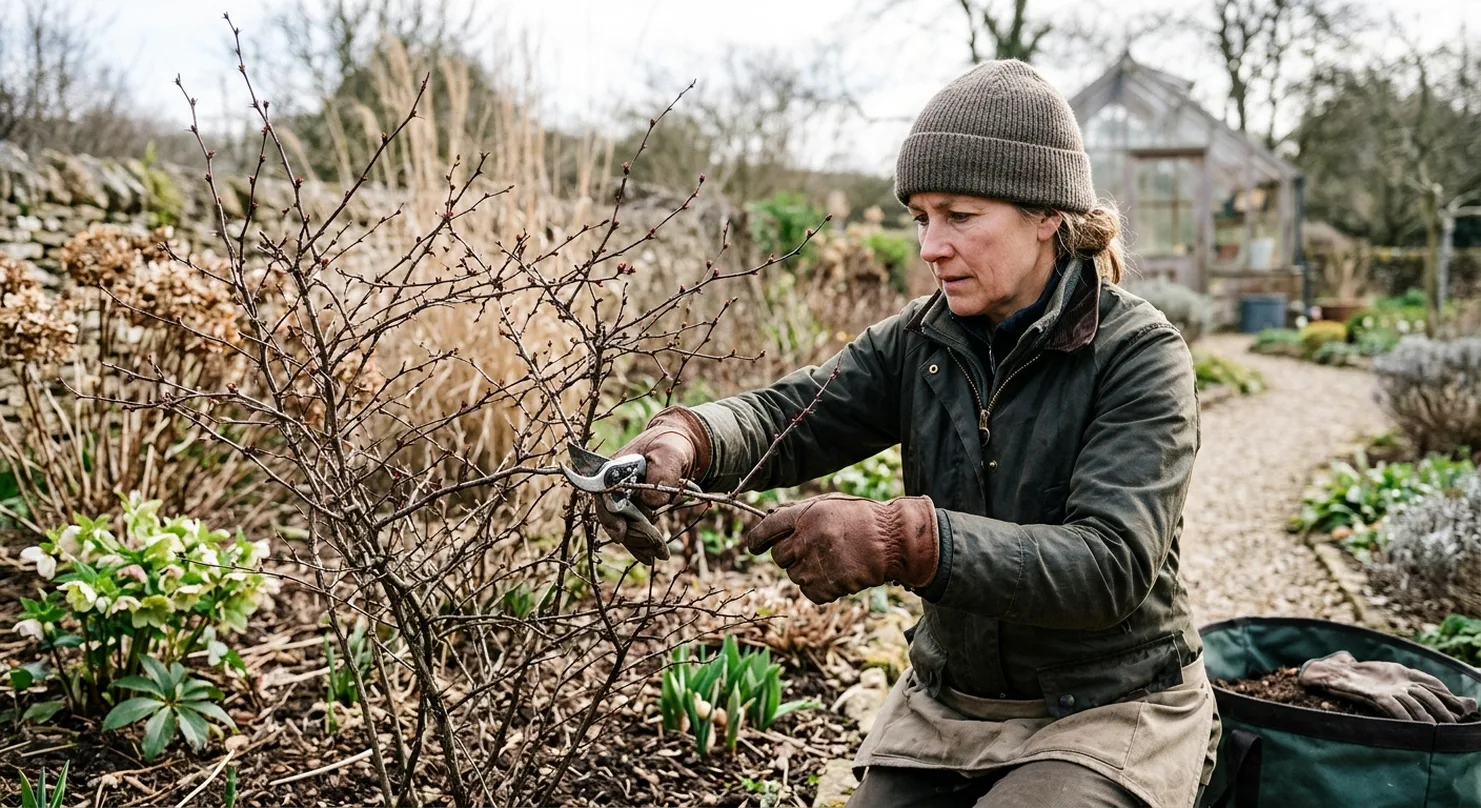
Buddleia davidii — the classic butterfly bush — flowers on new wood, meaning the stems that grow in the current season produce that year's blooms. Annual pruning therefore has a direct line to next summer's flower display. Skip it, and the shrub channels its energy into height rather than flowers, growing tall, sparse, and top-heavy, with blooms clustering out of sight at the top.
According to the Royal Horticultural Society (RHS), buddleja is easy to grow in a sunny spot and "just needs some annual pruning to look good." Left unpruned, many buddleja varieties will happily reach 2.5-3m (8-10ft), while annual hard pruning of B. davidii and B. x weyeriana keeps the shrub to a more manageable 1.8-2.4m (6-8ft).
There's an ecological payoff too. A well-pruned buddleia produces denser, more compact flower spikes at a height where pollinators can easily reach them. Gardeners across the UK regularly report peacock, red admiral, and small tortoiseshell butterflies feeding on buddleia blooms throughout summer, making thoughtful pruning as much a pollinator-support strategy as an aesthetic one.
Getting the timing right is the single most important factor in successful butterfly bush care. Buddleia moves through a clear seasonal pattern: dormancy over winter, a vigorous flush of new growth in spring, flowering through summer, and seed formation into autumn.
For the classic summer-flowering B. davidii, the RHS recommends pruning hard in early spring, specifically late March to mid-April, once the worst frosts have passed and buds are visibly swelling. Many UK gardening guides suggest a slightly earlier window, from late February, particularly in milder southern and western regions. The right moment for your buddleia pruning in the UK will depend on your local climate: gardeners in the south and west can often start as early as late February, while those in colder, northern areas should wait until closer to April to avoid exposing fresh cuts to late frost damage.
The golden rule is simple: wait until you can see new buds swelling on the stems, but don't delay so long that the plant has already put significant energy into new growth you'll be cutting away.
Visual suggestion: a seasonal calendar graphic showing the UK pruning window for buddleia (late February to mid-April, with regional variation noted). Alt text: "UK buddleia pruning calendar showing the best time to prune buddleia by region."
Not every buddleia follows this pattern. Some species, including B. alternifolia and B. colvilei, flower on the previous year's wood rather than new growth. These should be pruned after flowering, usually in early to mid summer, rather than in spring. B. globosa needs very little pruning at all; simply shorten overly long branches in late winter if needed, bearing in mind this will reduce that summer's flowering.
A tidy, well-executed prune depends as much on your tools as your technique. Before you start, gather:
- Sharp bypass secateurs for stems up to around 1.5cm thick
- Loppers for thicker branches that secateurs can't manage cleanly
- A pruning saw for old, woody growth at the base of mature shrubs
- Sturdy gardening gloves to protect your hands from rough bark and any thorny neighbours
- Eye protection and sturdy footwear, particularly useful when tackling a tall, overgrown shrub where debris can fall
Clean, sharp blades matter more than many gardeners realise. Blunt tools crush stems rather than cutting them cleanly, leaving ragged wounds that heal poorly and invite disease. Wipe your blades with a disinfectant between plants, especially if you've been pruning anything showing signs of disease, to avoid spreading problems around the garden.
It's worth checking over your pruning tools each year as part of general garden maintenance, sharpening blades and oiling joints before the pruning season begins.
Not every buddleia needs the same treatment. The right approach depends on the shrub's age, size, and condition. Here are the three levels of pruning you're likely to use, from gentle tidying to a full rejuvenation.
Light Shaping: How Do You Maintain a Healthy, Established Buddleia?
Light shaping, sometimes called maintenance pruning, suits a healthy, well-established buddleia that already has a good shape and size you want to preserve. Trim back the previous year's growth, cutting each stem to maintain the overall form of the shrub.
Make each cut just above a healthy, outward-facing bud, angling the cut slightly away from the bud. This directs new growth outward rather than into the centre of the plant, keeping the shrub open and airy rather than congested.
Moderate Renewal Pruning: The Most Common Approach for UK Gardens
Renewal pruning is the technique most domestic gardeners will use year after year, and it strikes a useful balance between vigorous growth and a manageable size. Cut stems back by roughly one-third to one-half of their length, removing any dead, damaged, or crossing branches in the process to open up the shrub's structure.
This approach encourages strong new growth without the dramatic size reduction of a full rejuvenation prune, making it ideal for most established buddleias that are performing well but could use a tidy-up and a boost.
Hard Rejuvenation Pruning: Reviving an Overly Large or Ageing Buddleia
For older shrubs, or those that have simply outgrown their space, hard rejuvenation pruning cuts the entire plant back to a low framework, typically 30-60cm above ground level. Some gardeners take this down to just 30cm for a particularly dramatic reset, creating a framework of permanent stems from which strong new shoots will emerge.
This drastic cut encourages vigorous new growth and often results in larger blooms the following season, though you'll sacrifice most or all of that current year's flowers. It's a short-term trade-off for long-term shrub health and shape.
Visual suggestion: a side-by-side comparison diagram illustrating light shaping, moderate renewal pruning, and hard rejuvenation pruning. Alt text: "Comparison diagram of three buddleia pruning techniques: light shaping, renewal pruning, and hard rejuvenation."
Even experienced gardeners can slip into a few avoidable habits when pruning buddleia:
- Pruning in autumn. This removes the stems that would otherwise flower the following summer and leaves fresh cuts exposed to winter frost damage.
- Leaving ragged cuts or stubs. Torn or uneven cuts heal poorly and create entry points for disease. Always use sharp, clean tools for a crisp cut.
- Over-pruning weak or young plants. A newly established buddleia doesn't need the same hard treatment as a mature, overgrown specimen; go easier until the plant is well rooted.
- Disposing of cuttings carelessly. Compost healthy prunings, but dispose of any showing signs of disease away from the garden to prevent it spreading.
Pruning is only half the job. What you do afterwards sets the shrub up for a strong season ahead.
Apply an annual 5cm (2in) mulch of well-rotted manure or garden compost around the base, which the RHS notes helps conserve moisture; on reasonably fertile soil, this mulch alone is usually enough without additional feeding. If your buddleia is in a container, it will need a slow-release fertiliser applied annually, or a liquid feed from April through September.
Keep an eye on fresh growth for pests. Since 2023, the RHS has reported increasing incidents of aphids on buddleja, recognisable by curled, puckered leaves with pale or yellowish patches. Catching this early makes treatment far simpler.
Water regularly in the weeks following pruning, particularly during dry spells, to support the flush of new growth. If your buddleia is newly planted, continue watering for up to 18 months until it's properly established.
A well-pruned buddleia doesn't just look tidier — it performs better in every sense that matters to a gardener. Annual pruning produces fuller, more compact flower spikes rather than the sparse, straggly blooms of a neglected shrub, giving your border a far more striking visual display through summer.
Lower, denser flowering also makes the blooms far more accessible to the butterflies and bees that buddleia is famous for attracting. Deadheading spent flower spikes after the main summer flush can encourage a second, smaller round of blooms, extending the pollinator season even further into autumn.
If you've inherited a buddleia that's been left to its own devices for years, don't despair. Even severely neglected shrubs typically respond well to hard rejuvenation pruning, bouncing back with vigorous new growth the following season.
For particularly large, woody, or stressed specimens, consider a staged approach: prune hard over two consecutive seasons rather than cutting everything back at once. This spreads the shock to the plant and gives it a better chance to recover without excessive stress.
If your buddleia isn't flowering well after pruning, a few common culprits are usually to blame: pruning at the wrong time of year (particularly in autumn, which removes next year's flowering wood), insufficient sunlight, or poor, waterlogged soil. The RHS notes that buddleia can struggle with root rot in cold, waterlogged conditions over winter, so if drainage is poor, consider planting on a raised bed or against a sheltered wall.
What happens if you don't prune a buddleia?
An unpruned buddleia grows tall, sparse, and woody, often reaching 2.5-3m or more. Flowers become smaller and sit out of reach at the top of the shrub, reducing both its visual impact and its accessibility to pollinators like butterflies and bees.
Can you prune buddleia in summer?
Hard structural pruning should be saved for early spring, as summer pruning removes flowering wood and reduces that season's display. However, light deadheading of spent flower spikes during summer is beneficial and can encourage a second flush of blooms. Buddleia species that flower on old wood, such as B. alternifolia, are the exception and should be pruned after flowering in early to mid summer.
When is the best time to prune buddleia in the UK?
Most guidance points to late February through mid-April, with the RHS specifically recommending late March to mid-April for B. davidii. Gardeners in milder southern and western regions can often prune earlier, while those in colder areas should wait until the worst frosts have passed and buds are visibly swelling.
How hard should you cut back a buddleia?
This depends on the shrub's condition. Light shaping suits healthy, well-shaped plants; moderate renewal pruning (cutting back by a third to a half) suits most established buddleias; and hard rejuvenation pruning, down to 30-60cm, suits older or overgrown shrubs needing a reset.
Is it bad to hard prune a buddleia every year?
No. Annual hard pruning is standard practice for B. davidii and keeps the shrub to a manageable 1.8-2.4m while encouraging strong flowering. It's one of the reasons buddleia is considered such a low-maintenance, rewarding shrub for UK gardens.
Annual, well-timed pruning is what transforms buddleia from a leggy, overgrown shrub into a compact, flower-laden pollinator magnet. To recap the three techniques:
- Light shaping for healthy, well-established shrubs that just need tidying
- Moderate renewal pruning for most domestic buddleias, cutting back by a third to a half
- Hard rejuvenation pruning for older or oversized shrubs, cutting back to 30-60cm
Use this quick checklist to stay on track each year:
- Late February to mid-April (depending on your region): prune once the worst frosts have passed
- Clean and sharpen your secateurs, loppers, and pruning saw before you start
- Choose your pruning level based on the shrub's age and condition
- Cut just above a healthy, outward-facing bud
- Mulch with well-rotted manure or compost after pruning
- Water regularly in the following weeks, especially during dry spells
- Deadhead through summer to encourage a second flush of blooms
- Watch for aphids on fresh new growth
For more seasonal advice, explore our wider butterfly bush care guide and our guide to pollinator-friendly planting for UK gardens. And if you'd like more seasonal tips like this delivered straight to your inbox, consider subscribing to our newsletter.