Country Versions | Great Britain Flag | USA Flag | Canada Flag
GardenSeeker.Garden Pruning Businesses Search Gardening Gifts ☰

Pruning Apple Trees: When and How to Prune (UK Guide)

Pruning Apple Trees: When and How to Prune for a Bumper Harvest

Abutilon

Apple trees need pruning twice a year for the best results: a light summer prune in August to control vigorous growth, and a more thorough winter prune (between leaf fall and bud break) to shape the tree, remove dead or crossing wood, and encourage fruiting spurs. Prune young trees to establish a strong framework, and tackle neglected trees gradually over three to four years to avoid triggering excessive regrowth.

Few gardening jobs feel as satisfying as stepping back from a freshly pruned apple tree and admiring its new shape. But pruning apple trees isn't just about aesthetics. Done well, it keeps your tree healthy, manageable, and productive for decades. Done badly—or not at all—and you'll end up with a tangled, overcrowded tree that puts more energy into leafy growth than into apples.

If you've ever wondered why your apple tree produces masses of leaves but barely any fruit, the answer is often simple: it needs pruning. Regular, considered pruning opens up the canopy to let in light and air, directs the tree's energy towards fruit-bearing wood, and keeps the whole plant at a size you can actually harvest from without a ladder and a prayer.

This guide walks you through everything UK gardeners need to know about pruning apple trees—from training young trees in their first few years, to the differences between summer and winter pruning, to rescuing an old, neglected specimen that hasn't seen secateurs in a decade. By the end, you'll know exactly when to prune, which cuts to make, and how to avoid the common mistakes that leave trees sulking (or shooting wildly) the following year.

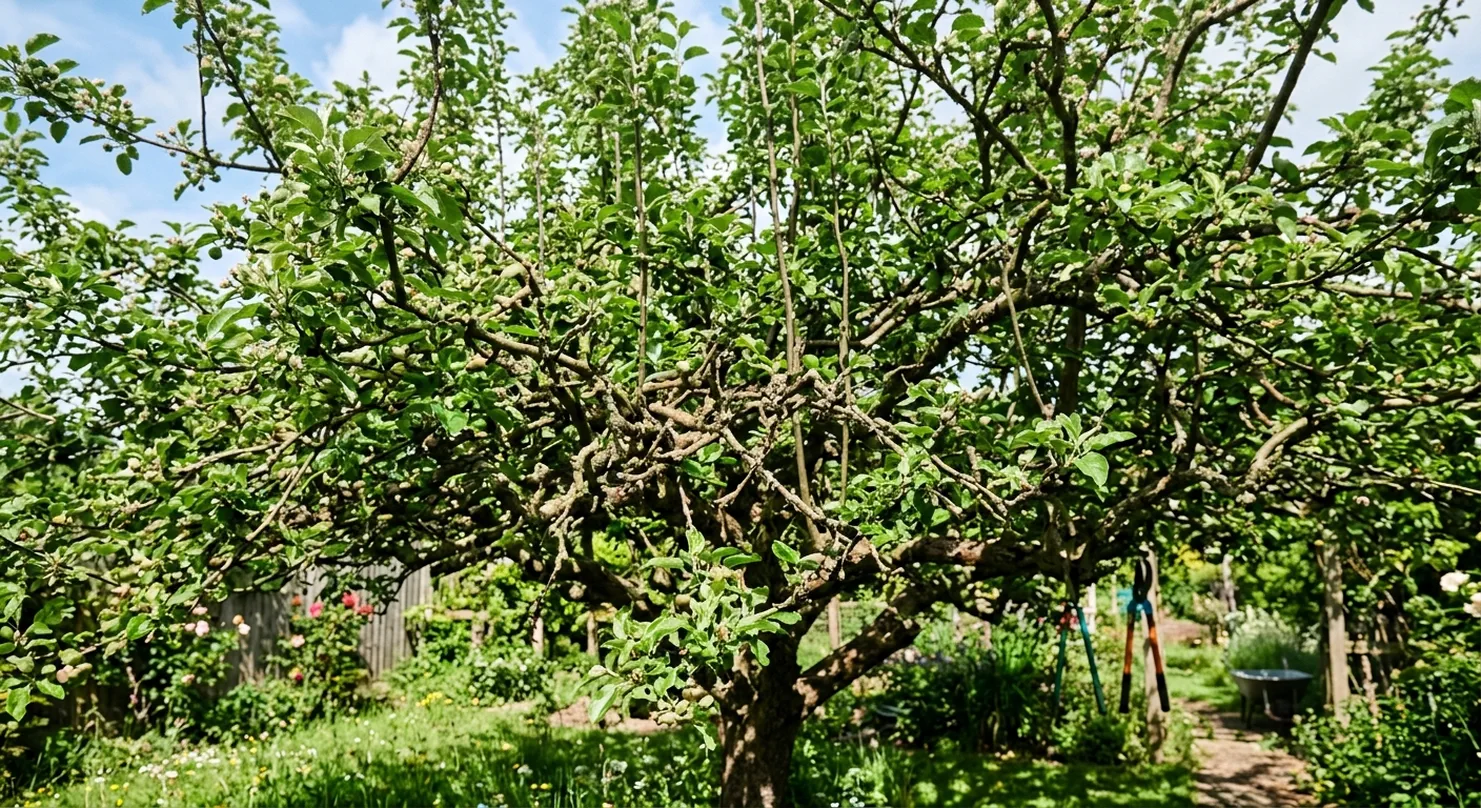
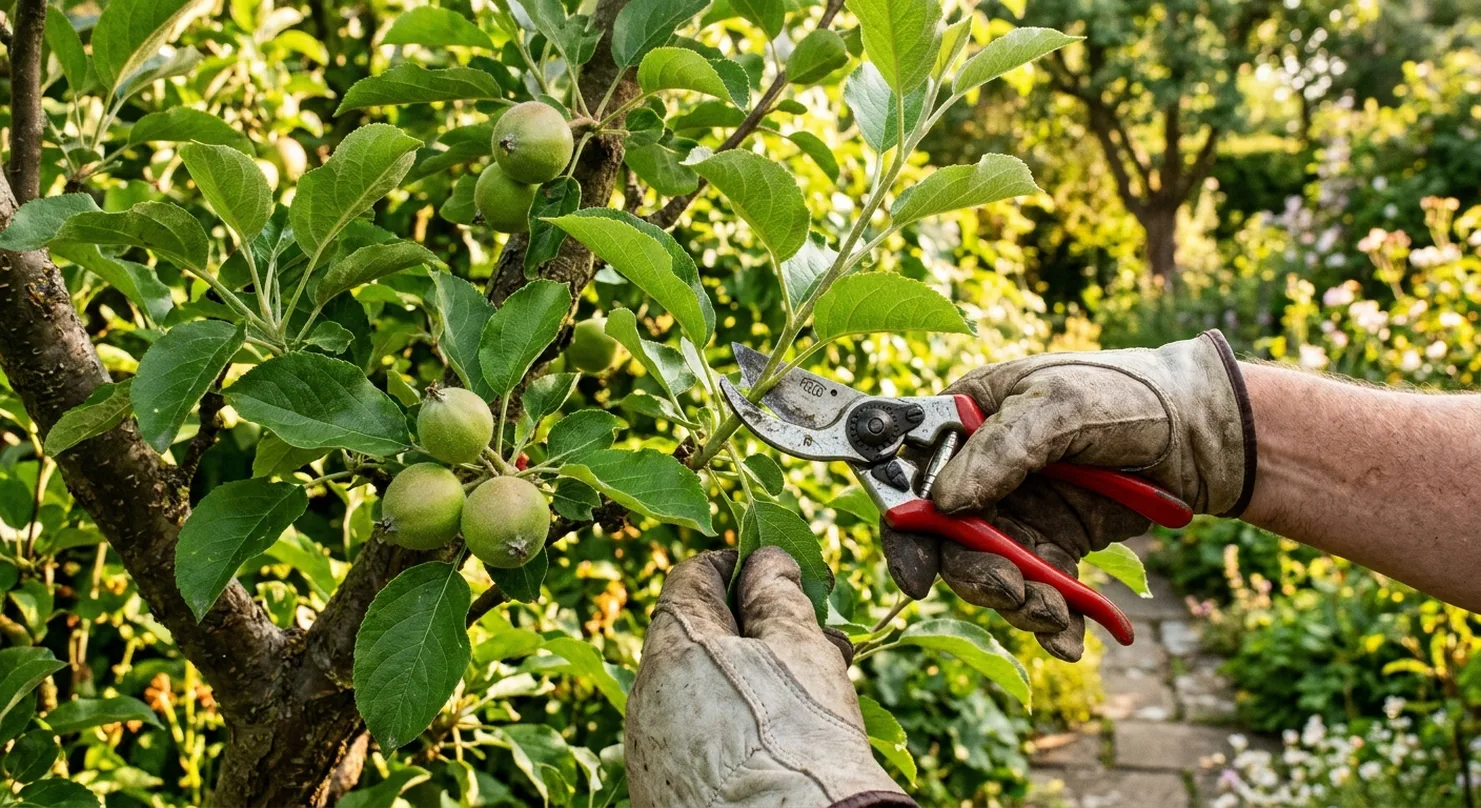
Advice and information about pruning apple trees.

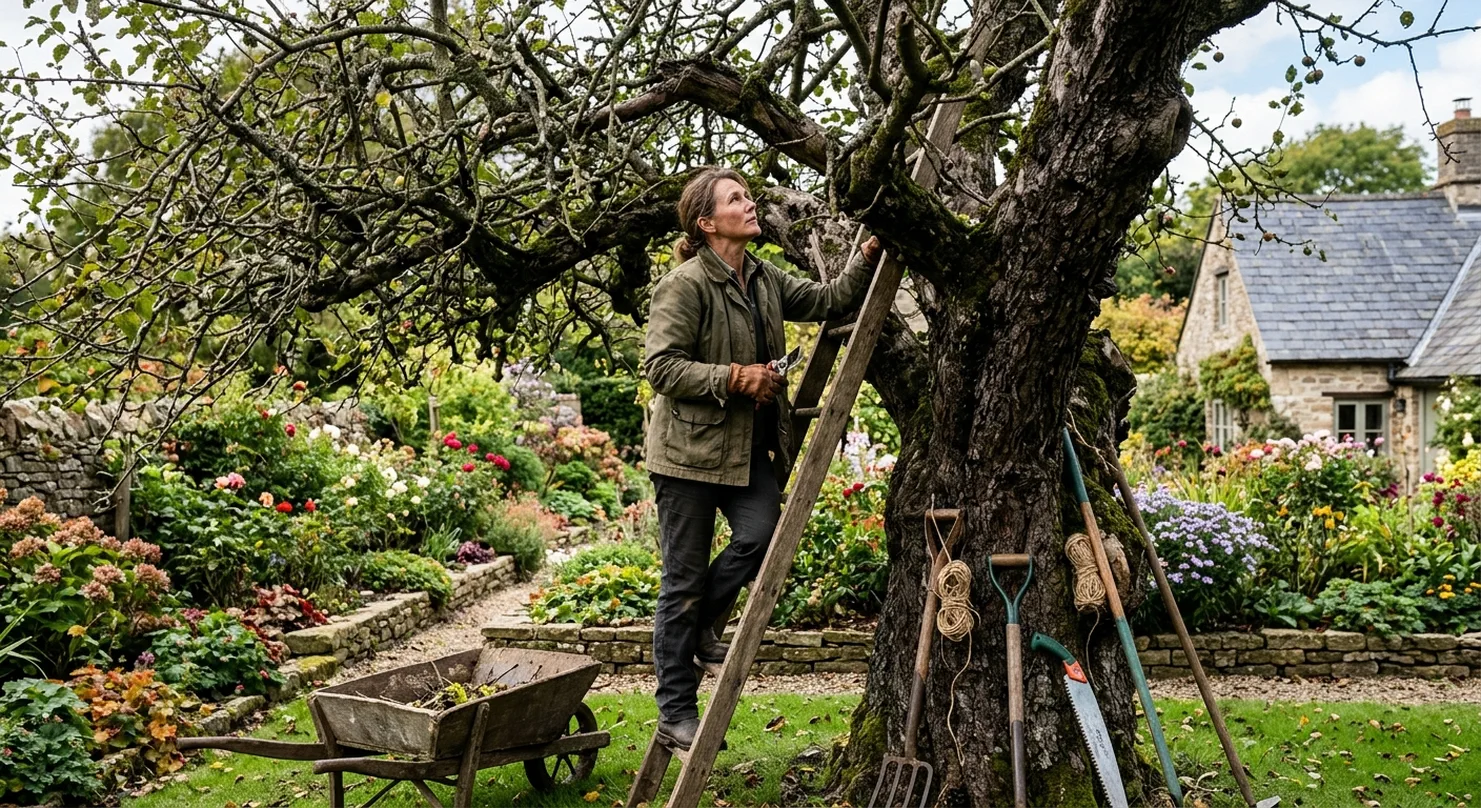
The pruning loppers are taken to the overgrown Apple Tree

For a start, the 'top' that you buy has either been field-grown - and therefore had its roots damaged upon lifting for sale. Or, it will have been container grown with a substantial feeding regime to get the young tree saleable.

The first thing a newly planted apple tree will do - or should be persuaded to do - is to produce a good root system, after firstly getting settled into its new home.

Timing of pruning apple trees is quite important. If the summer pruning is done to early, then developing fruit buds can start into growth when they should be dormant. These buds will not develop fully, and therefore be lost for the following year. Late August is a good time for any summer pruning, and certainly no earlier than the beginning of August.

Training and Pruning from Year One

Abutilon

The pruning habits you establish in an apple tree's first few years shape its structure for the rest of its life. A young tree's framework—the main branches that will carry fruit for decades—is built through careful, formative pruning rather than left to chance.

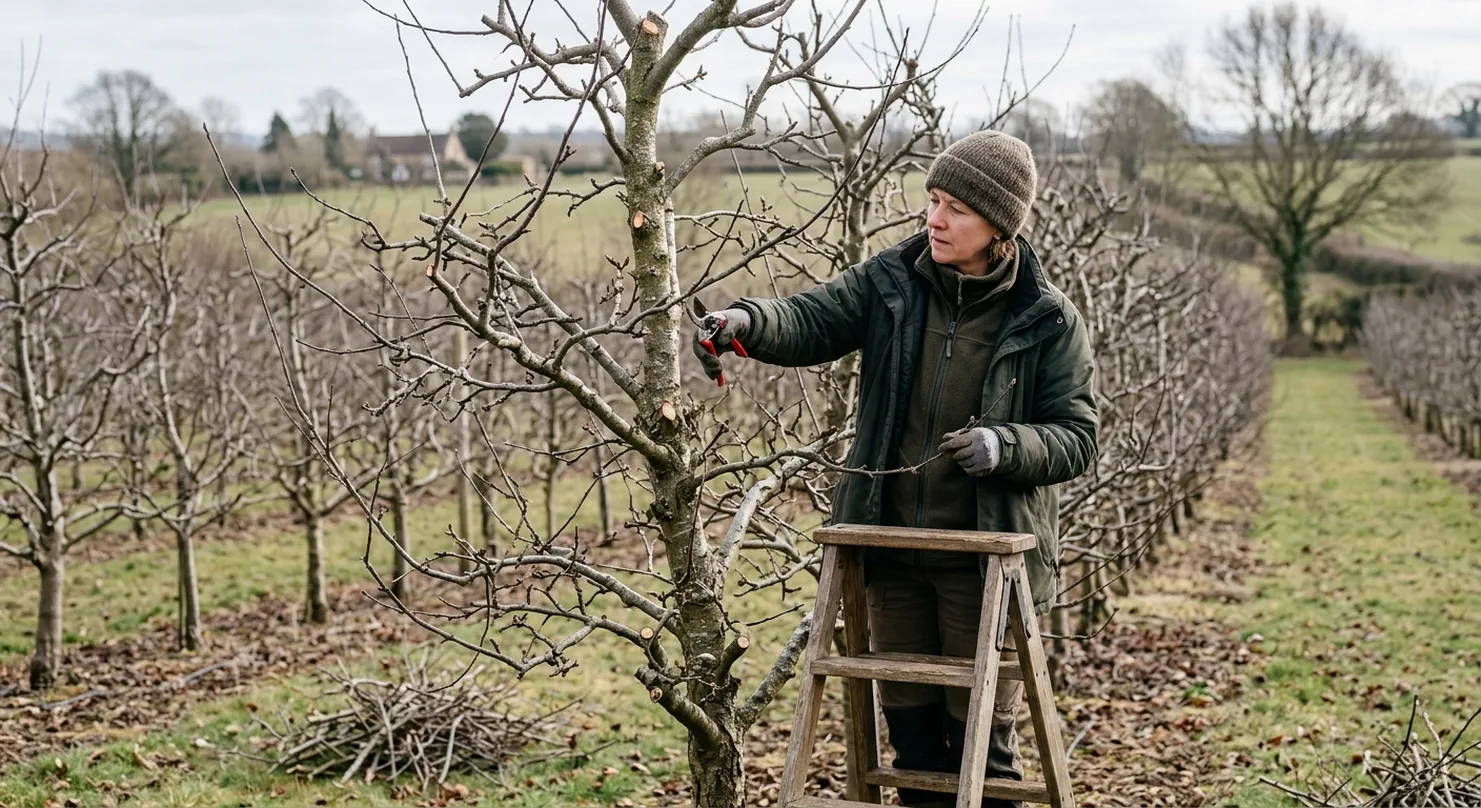
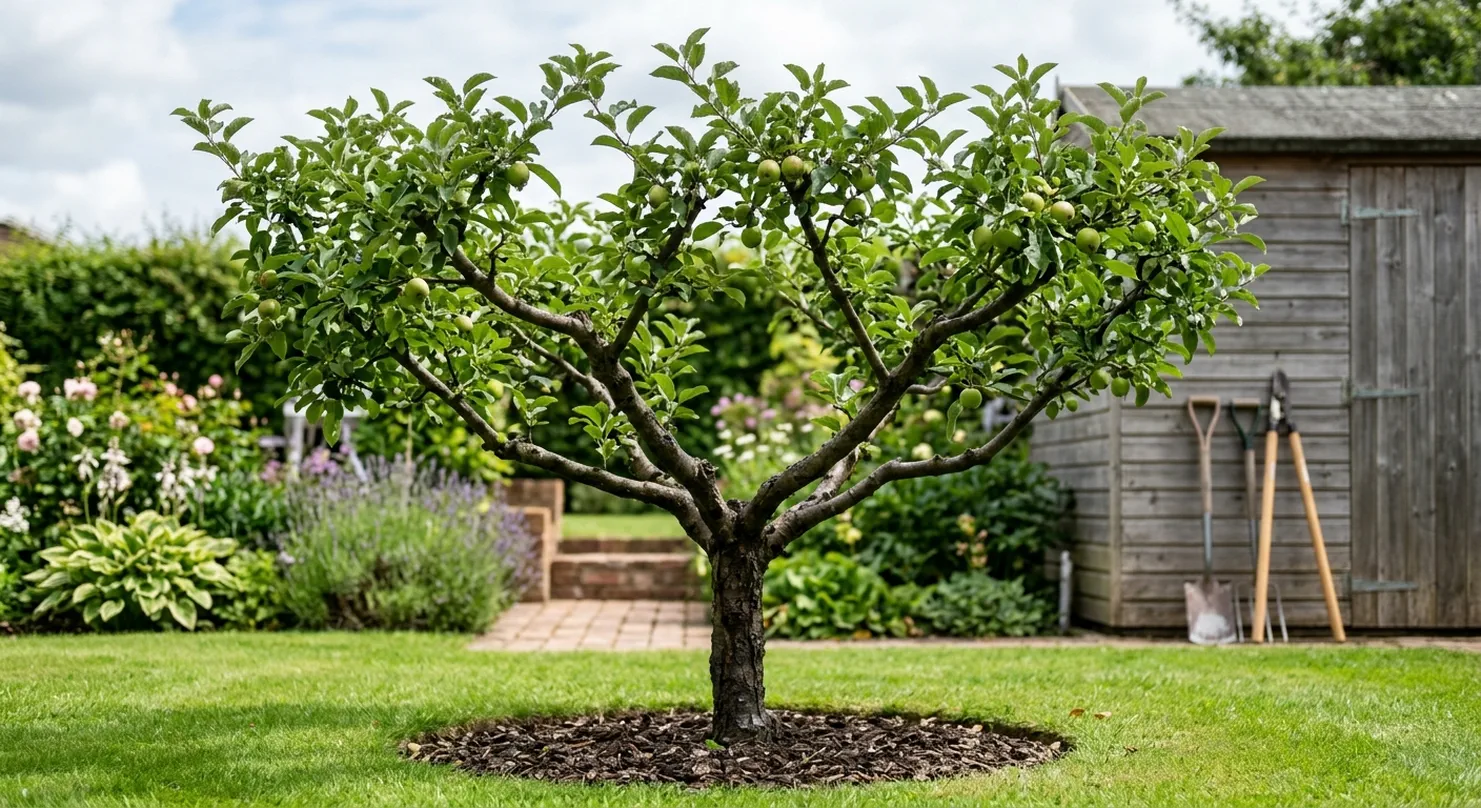
In the first winter after planting, the goal is to encourage a strong, open framework of three to five well-spaced main branches, rather than a dense thicket of competing shoots. This typically means removing any damaged, crossing, or badly placed branches and shortening the main stems to encourage branching lower down.

As the tree matures over the following two or three winters, continue to select and encourage well-placed branches while removing anything that competes with the main framework. Patience here pays off: a well-trained young apple tree will need far less corrective pruning once it reaches maturity, and it will crop more reliably because its branches are positioned to make the most of available light.


extraAdvert

The Two Pruning Seasons: Summer vs. Winter

Abutilon

Apple trees are typically pruned twice a year, and each season serves a different purpose. Understanding this distinction is the key to pruning with confidence rather than guesswork.

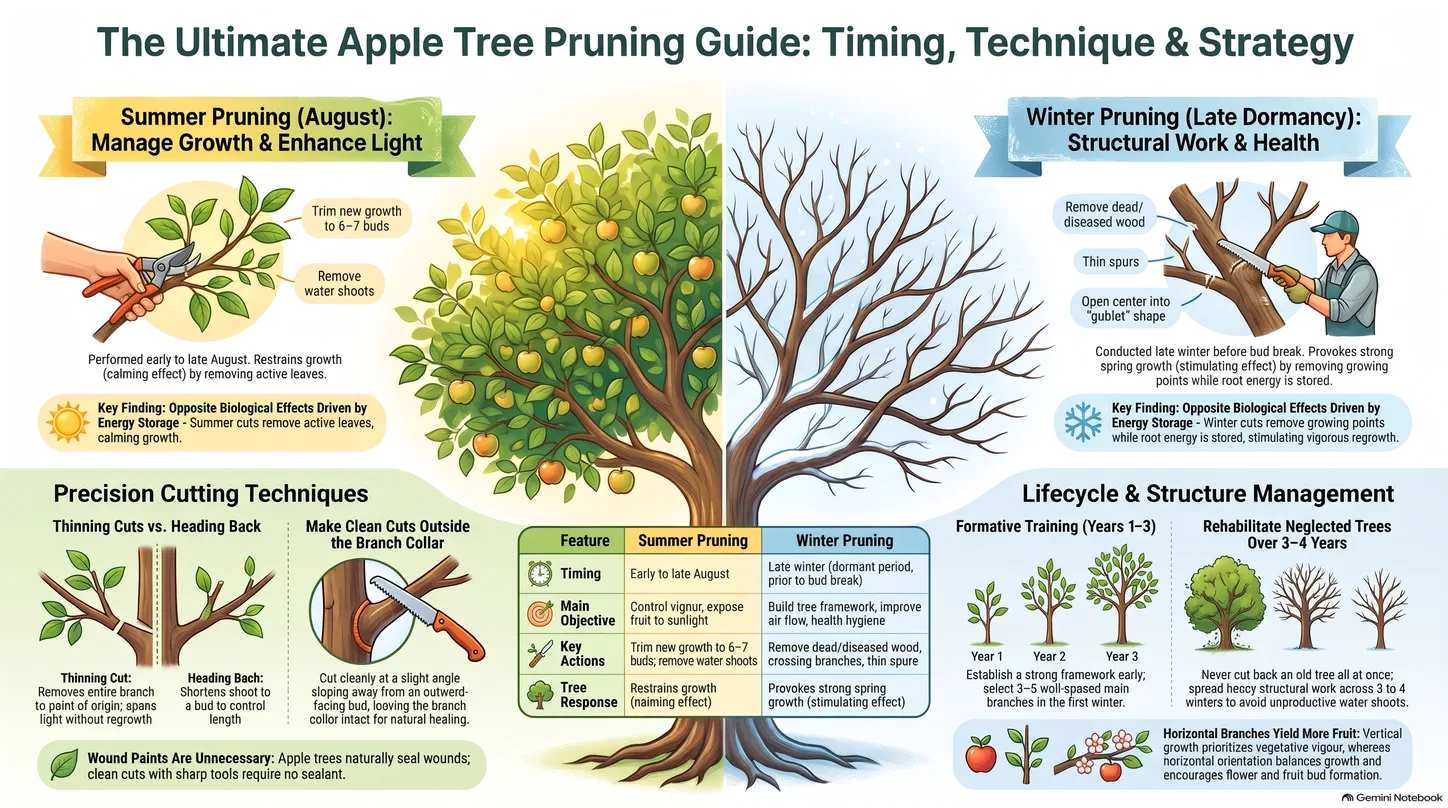
Summer pruning, carried out from early to the end of August, is a lighter, more restrained job. Its main purpose is to control vigorous growth and improve light penetration into the canopy, which helps ripen fruit and encourages the formation of fruiting spurs for next year.

Winter pruning, carried out while the tree is dormant, is the more substantial structural work. This is when you remove dead, diseased, or crossing branches, thin out overcrowded spurs, and open up the centre of the tree to improve air circulation and light.

Why does this seasonal split matter? It comes down to how the tree stores and uses energy.

How to Prune Apple Trees in the Summer

Abutilon

When should you summer-prune an apple tree?

Summer pruning should take place from early August through to the end of the month. Pruning too early, while the tree is still putting on strong growth, can encourage a flush of regrowth rather than calming things down—so timing matters.

What's the technique for summer pruning?

The classic summer pruning technique involves cutting back the current season's new growth to around six or seven buds from the main stem or branch. This restrains overly vigorous shoots, redirects the tree's energy into developing fruit buds, and lets more light reach the ripening fruit.

Should you remove water shoots in summer?

Yes. Water shoots—the vigorous, upright, often whippy stems that shoot straight up from branches or the trunk—should be removed during summer pruning. These shoots rarely bear fruit and, left unchecked, they crowd the canopy and shade out more productive wood. Cut them out cleanly at their base.

How to Prune Apple Trees in the Winter

Abutilon

When is the best time for winter pruning?

Winter pruning should ideally be done as late as possible in the dormant season, just before bud break in spring. Pruning close to bud break reduces the window in which the tree might respond with excessive regrowth, and it lets you clearly see the tree's structure once all the leaves have dropped.

What should you remove during winter pruning?

Winter is the time for the more significant structural work. Focus on:

  • Overcrowded spurs: Thin out congested fruiting spurs so the remaining ones have room to develop and ripen fruit properly.
  • Diseased or damaged branches: Remove any wood showing signs of disease, damage, or decay to protect the tree's overall health.
  • Crossing branches: Where two branches rub or cross, remove the weaker or less well-placed one to prevent wounds that can let in disease.

Why should you open up the centre of the tree?

Opening up the centre of the tree—sometimes described as creating a "goblet" shape—allows light and air to reach all parts of the canopy, not just the outer edges. This improves fruit ripening, reduces the risk of fungal diseases that thrive in damp, still air, and makes harvesting far easier.

How much should you prune in winter?

This is where many gardeners go wrong: over-pruning. Removing too much wood in one winter session can shock the tree into producing a mass of vigorous, non-fruiting water shoots the following summer, rather than the balanced growth you're hoping for. As a general principle, resist the urge to remove more than is necessary to achieve a healthy, open structure in any single season.


Winter Pruning vs. Summer Pruning: Key Differences

Abutilon

It's worth understanding why the same tree needs two quite different approaches across the year.

In winter, the tree is dormant, but its roots have already stored the energy reserves it needs for the following spring's growth. Hard pruning at this time removes relatively little stored energy in absolute terms, but it does remove growing points—so the tree responds by channelling its considerable stored energy into fewer remaining buds, often producing vigorous, upright water shoots rather than fruitful growth.

This is precisely why heavy winter pruning carries a real risk: cut back too hard, and you may trigger exactly the kind of unruly regrowth you were trying to avoid. Summer pruning, by contrast, removes leafy growth that the tree is actively using for photosynthesis, so it has a calming rather than a stimulating effect—restricting vigour rather than provoking it.

Choose winter pruning if your priority is shaping the tree's structure, removing diseased or crossing wood, and opening up the canopy. Choose summer pruning if your priority is controlling excessive vigour and encouraging fruit buds to form on the current season's growth. Most established apple trees benefit from both, used for their respective purposes rather than interchangeably.


Pruning Cuts - Apple Trees

Abutilon

Pruning Cuts Explained

Knowing when to prune is only half the job—how you cut matters just as much for the tree's long-term health.

What's the difference between thinning cuts and heading back?

A thinning cut removes an entire branch or shoot back to its point of origin, whether that's the trunk or another branch. Thinning cuts open up the canopy and improve light and air circulation without stimulating excessive regrowth nearby, making them the preferred cut for removing overcrowded or badly placed wood.

Heading back, on the other hand, involves shortening a shoot or branch to a bud partway along its length, rather than removing it entirely. This is the technique used in summer pruning, where shoots are cut back to six or seven buds. Heading back encourages branching from the buds just below the cut, so it's useful for shaping growth—but used too aggressively, it can stimulate the kind of vigorous regrowth that over-pruning causes.

How do you make a clean, neat cut?

Always cut with sharp, clean secateurs or loppers to avoid crushing or tearing the bark, which can leave the tree vulnerable to disease. Cut just above a healthy, outward-facing bud at a slight angle, sloping away from the bud so that water runs off rather than pooling on it. When removing a whole branch, cut just outside the branch collar—the slightly swollen area where the branch joins the trunk or a larger branch—rather than flush against it, as the collar contains the tissue the tree needs to heal over the wound naturally.

One thing you don't need to worry about: pruning compound or wound paint. Despite once being standard advice, apple trees heal perfectly well without sealing cuts, and a clean cut made with sharp tools is all the protection the wound needs.

Tips for Pruning Old and Neglected Apple Trees

Abutilon

Inheriting an old, overgrown apple tree—whether in a new garden or an orchard that's been left untended for years—can feel daunting. The temptation is to take drastic action and cut hard in one go, but this is exactly the wrong approach.

Severely cutting back an old, neglected tree all at once triggers a massive surge of vigorous water shoot growth, as the tree's substantial stored energy reserves are suddenly redirected into far fewer buds. Instead, rehabilitate an old tree gradually, spreading the restoration work over three to four winters.

In the first winter, focus on removing dead, diseased, and clearly damaged wood, along with the most obviously overcrowded or crossing branches. In subsequent winters, continue thinning out congestion and reshaping the canopy a little at a time, always keeping the overall amount removed moderate. This gradual approach lets the tree adjust steadily, avoids shocking it into unproductive regrowth, and brings it back into good health and fruitfulness without years of dealing with a thicket of water shoots.

The Benefits of Pruning Apple Trees

Abutilon

With all this effort involved, it's worth being clear about exactly what good pruning achieves.

A manageable size and shape. Regular pruning keeps an apple tree at a height and spread that suits your garden and makes harvesting practical, rather than letting it grow unchecked into an unwieldy giant.

Increased fruit yields. By removing overcrowded, weak, or non-productive wood, pruning directs the tree's energy towards fewer, stronger fruiting spurs, often resulting in larger, better-quality apples rather than a mass of small, poorly ripened ones.

Better fruiting from horizontal branches. Horizontal branches consistently bear more fruit than vertical ones. This is because vertical growth is driven by vigour—the tree's instinct to grow upward and outward—while horizontal branches settle into steadier, more balanced growth that favours flower and fruit bud formation over leafy shoots. This is one of the key principles behind training young trees to develop wide-angled, more horizontal branches from the outset.

Growing Confidence, One Cut at a Time

Abutilon

Pruning an apple tree doesn't need to feel like a high-stakes gamble. Once you understand the rhythm of the pruning year—a light summer trim to manage vigour, a more considered winter prune to shape and open the canopy—the whole process becomes far more intuitive.

Start by observing your tree before you cut: look for water shoots, crossing branches, and congested spurs before you make a single snip. Prune young trees formatively to build a strong, open framework from the start, and if you've taken on an old, neglected tree, resist the urge to fix everything in one winter. Spread the work out, be patient, and let the tree recover steadily.

Get the timing and technique right, and you'll be rewarded with a healthier tree, an easier harvest, and—most importantly—better apples, year after year.

Frequently Asked Questions

How often should I prune my apple tree?
Most established apple trees benefit from pruning twice a year: a light prune in summer (early to end of August) to manage vigour, and a more thorough prune in winter, carried out as late as possible before bud break, to shape the tree and remove unwanted wood.

What happens if I prune an apple tree too hard?
Pruning too hard, particularly in winter, can trigger a surge of vigorous, upright water shoots the following season. This happens because the tree redirects its stored energy into fewer remaining buds. It's best to prune moderately and consistently rather than removing large amounts of wood in one go.

Do I need to seal pruning cuts with wound paint?
No. Apple trees heal naturally from clean cuts made with sharp tools, and pruning compound or paint isn't necessary.

How do I prune a very old, neglected apple tree?
Restore an old or neglected apple tree gradually, over three to four winters, removing dead, diseased, and overcrowded wood a little at a time. Avoid cutting back hard all at once, as this encourages excessive, unproductive regrowth.

What's the difference between thinning cuts and heading back?
A thinning cut removes an entire branch or shoot back to its point of origin and opens up the canopy without stimulating much regrowth. Heading back shortens a shoot to a bud partway along, encouraging branching below the cut—this is the technique used for summer pruning.

Why do horizontal branches produce more apples?
Horizontal branches grow more steadily than vertical ones, which favours the formation of flower and fruit buds. Vertical growth, by contrast, is driven by vigour and tends to produce leafy shoots rather than fruit.


Most Read Pruning Articles are


Copyright © Gardenseeker.garden - 2000 - 2027

/ Advertising listing / Privacy Policy
Contact Us

| DMCA.com Protection Status